Quick Links
|
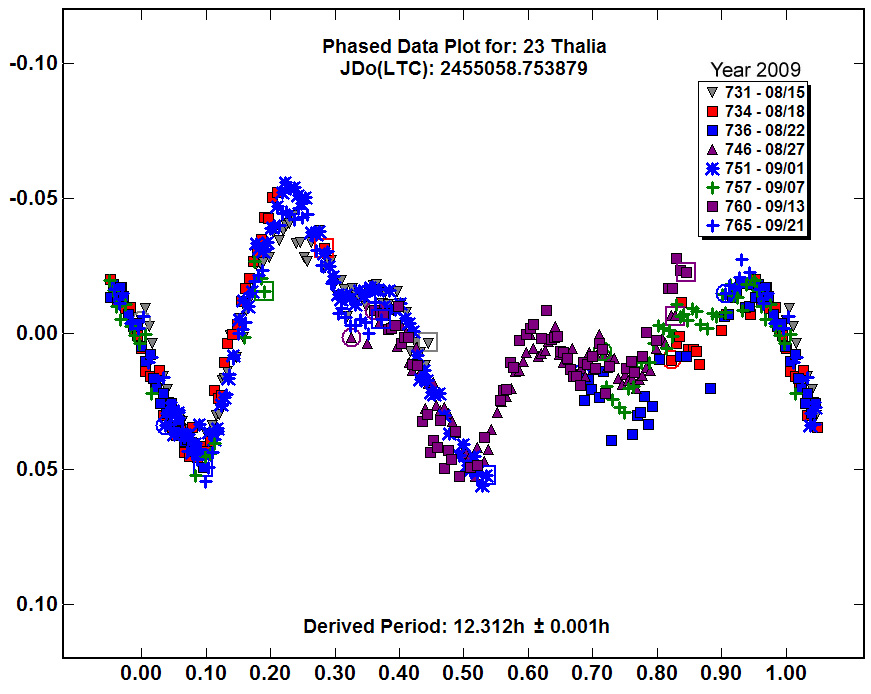
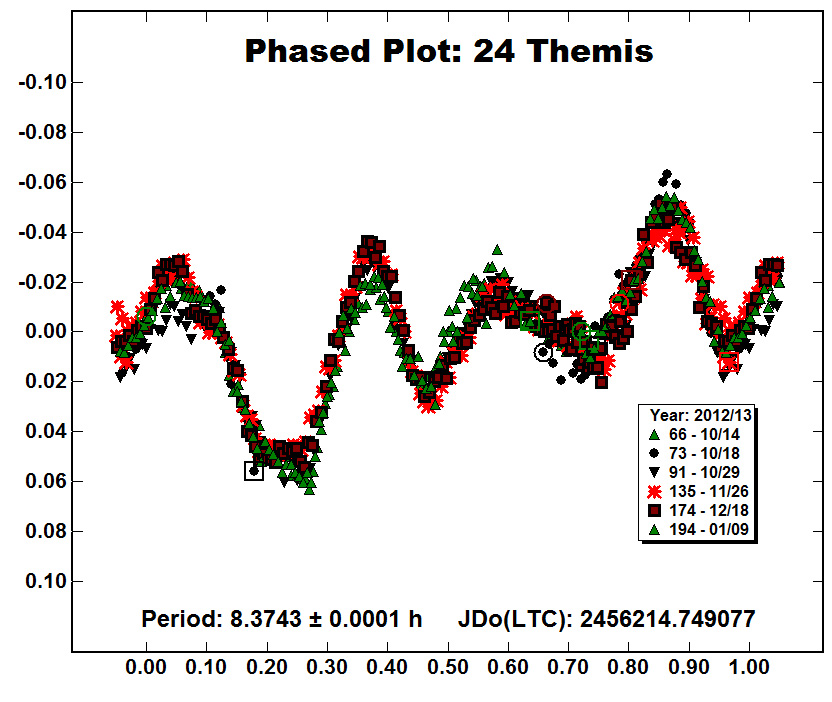
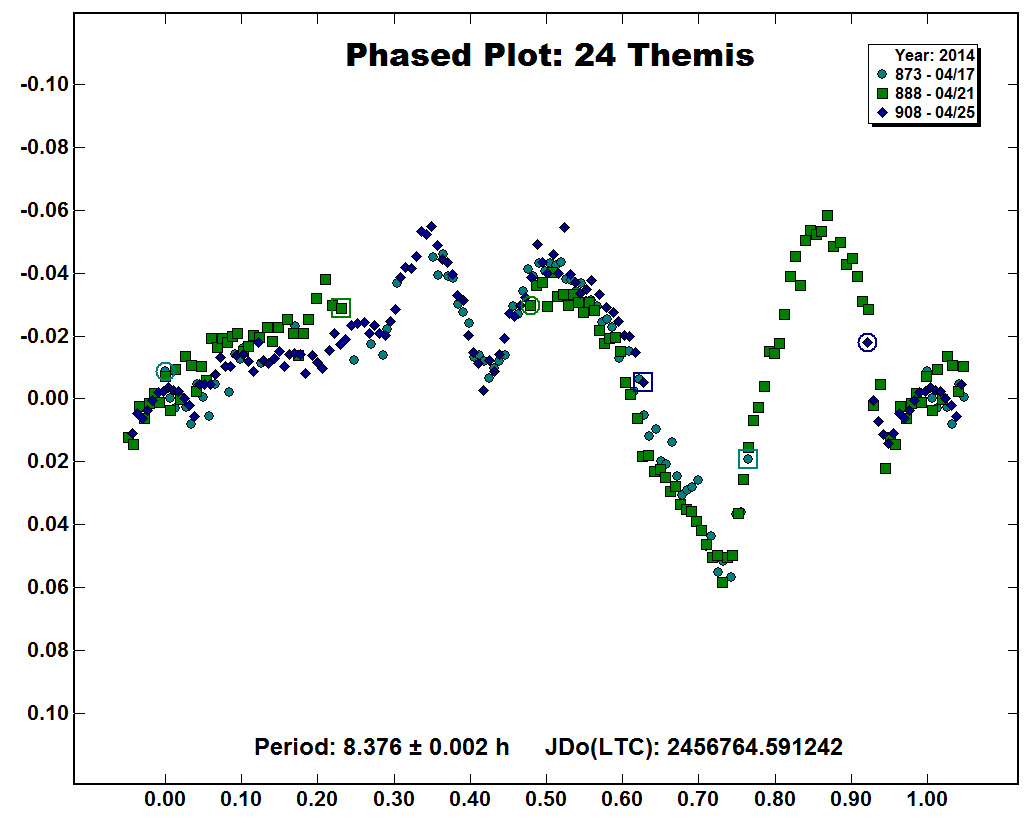
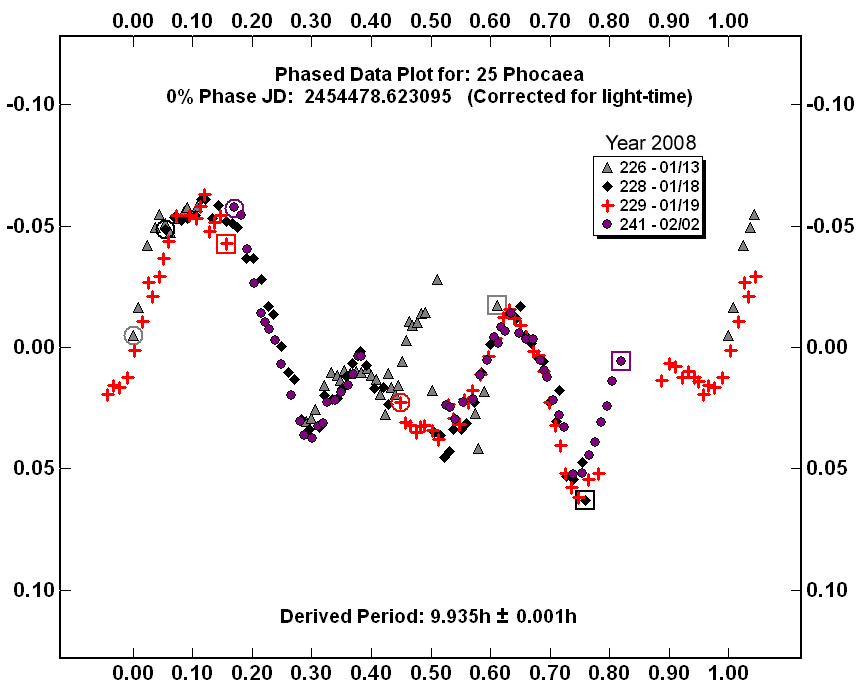
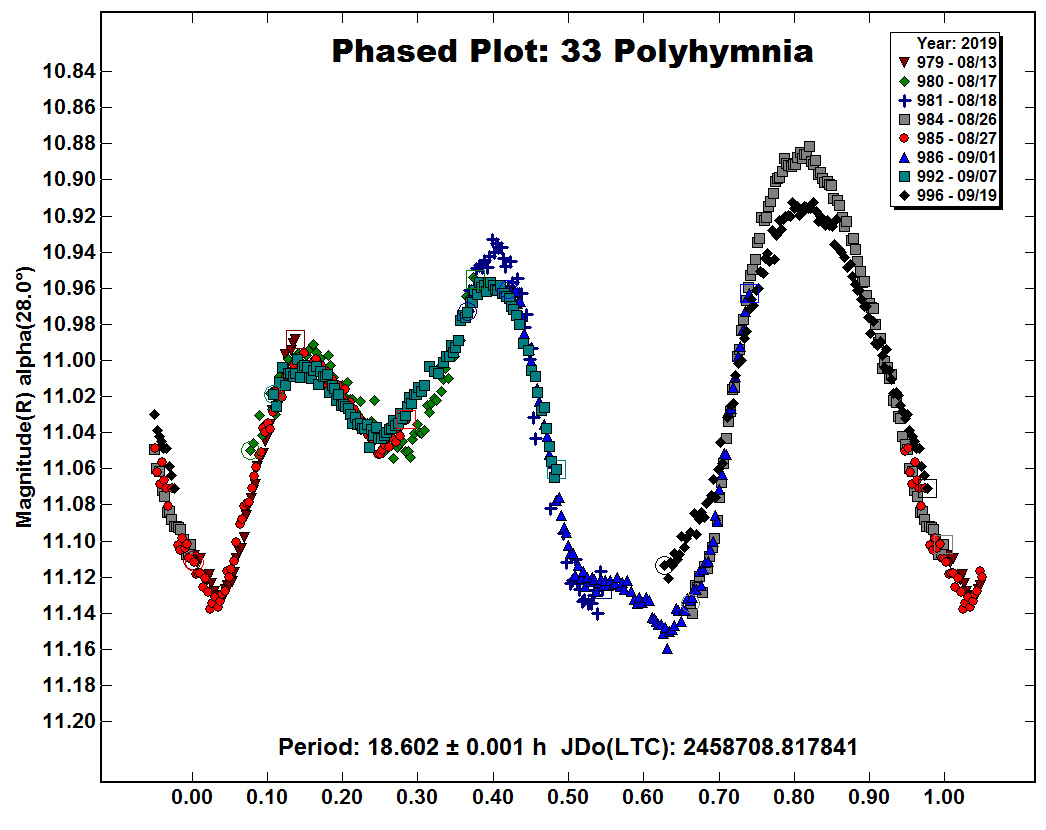
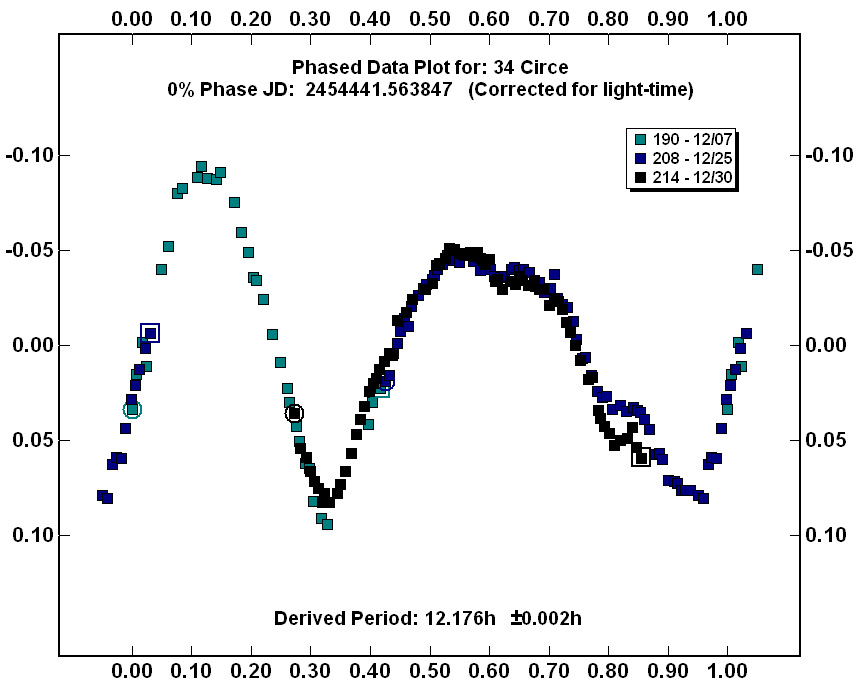
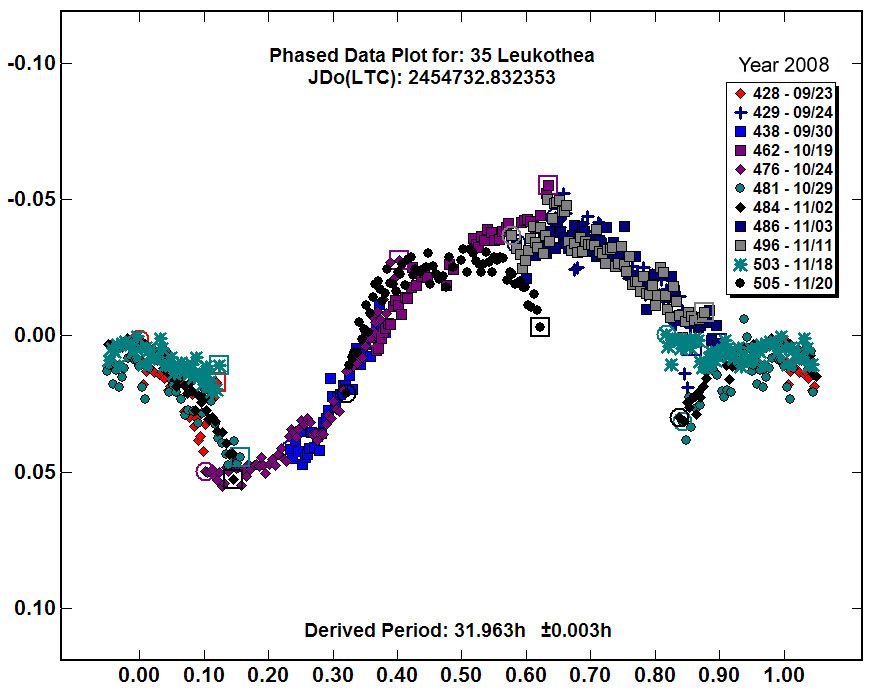
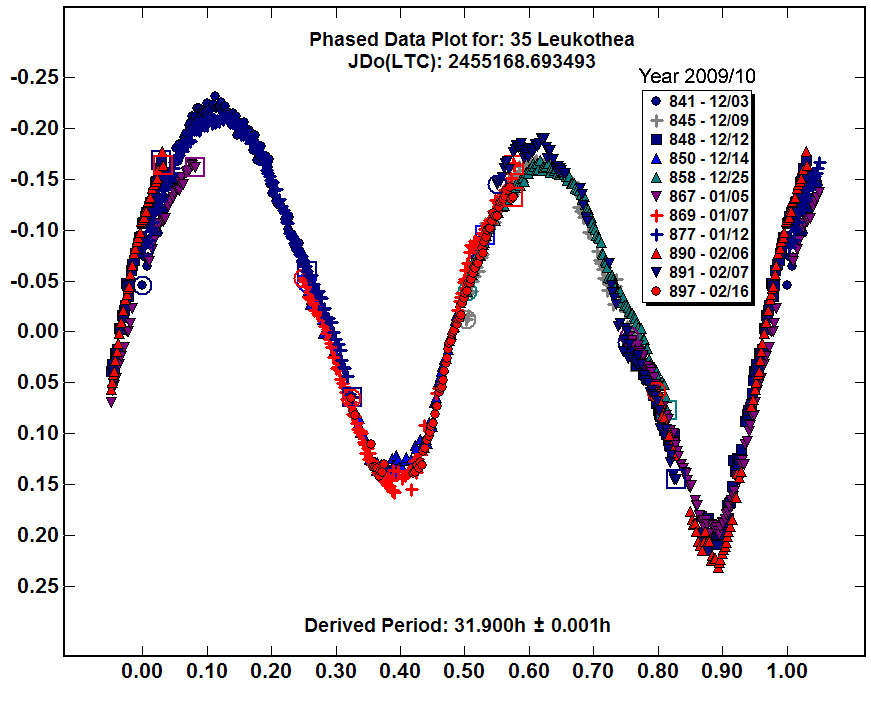
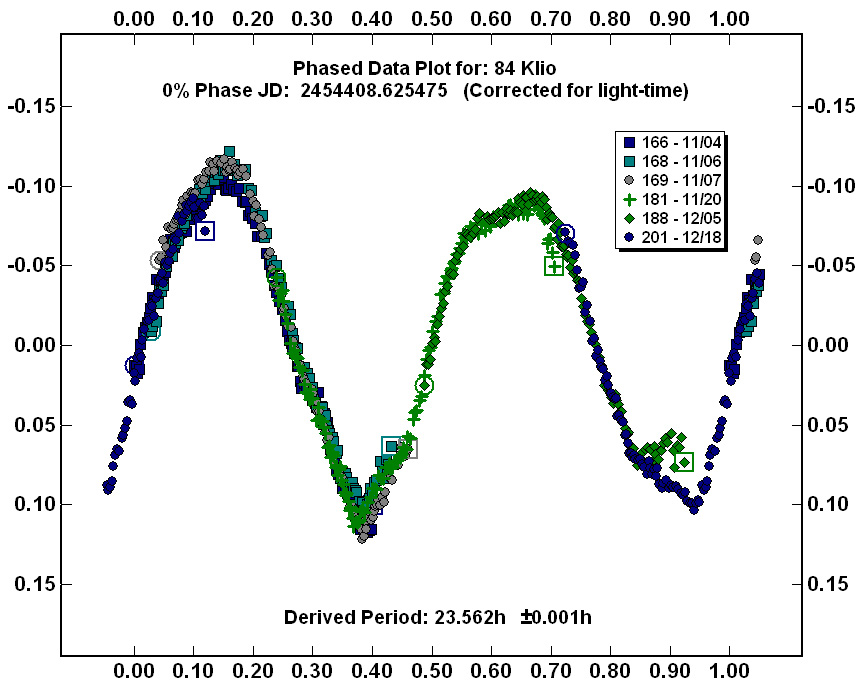
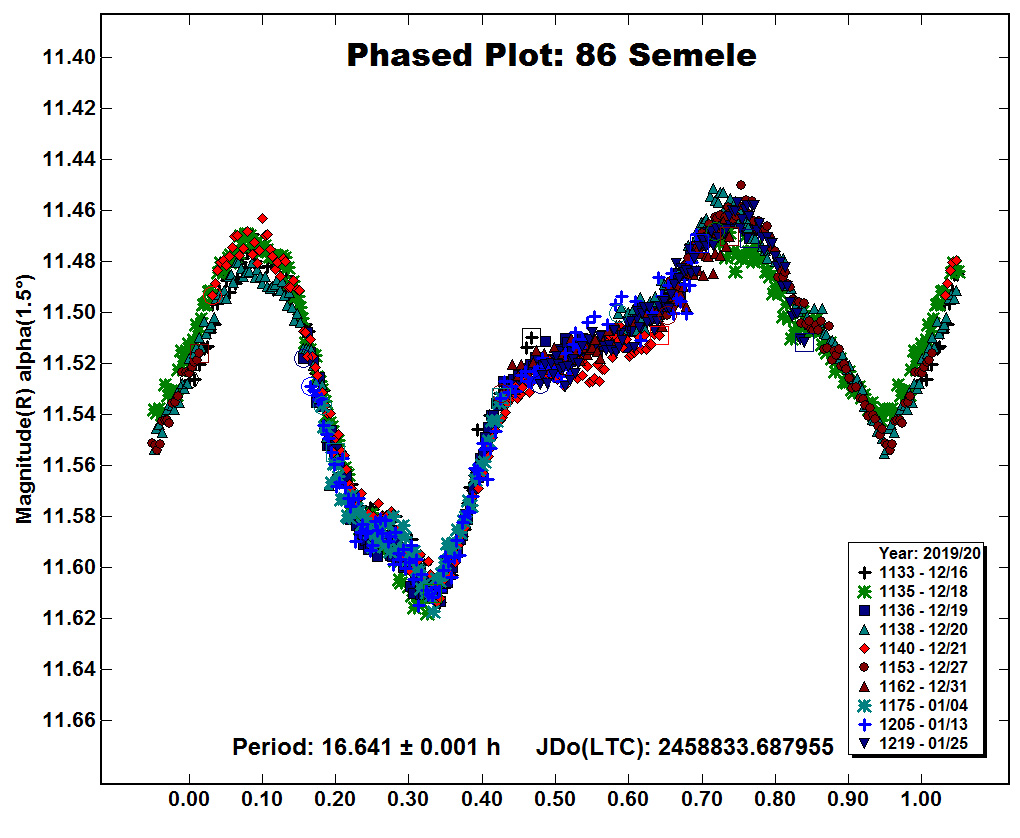
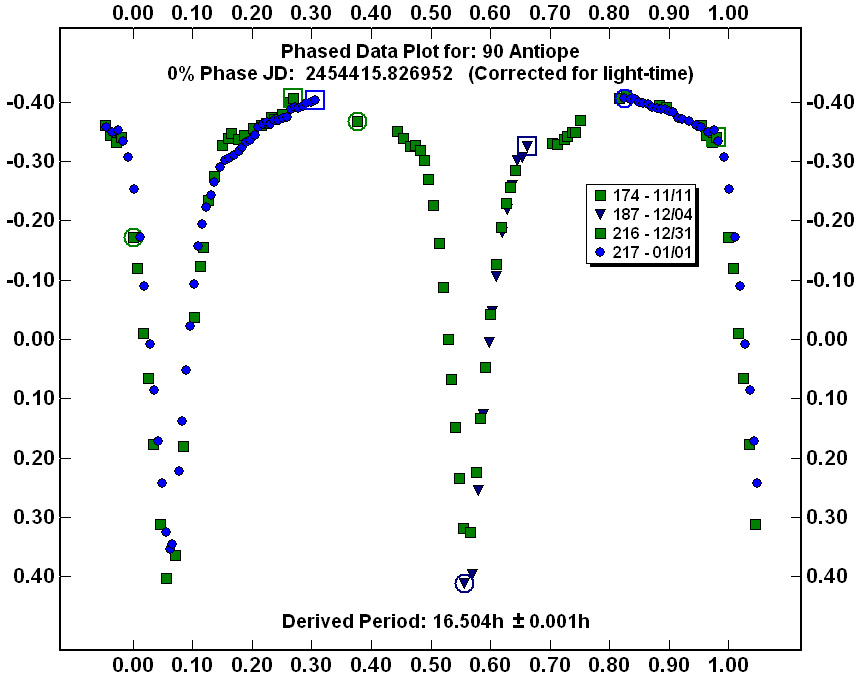
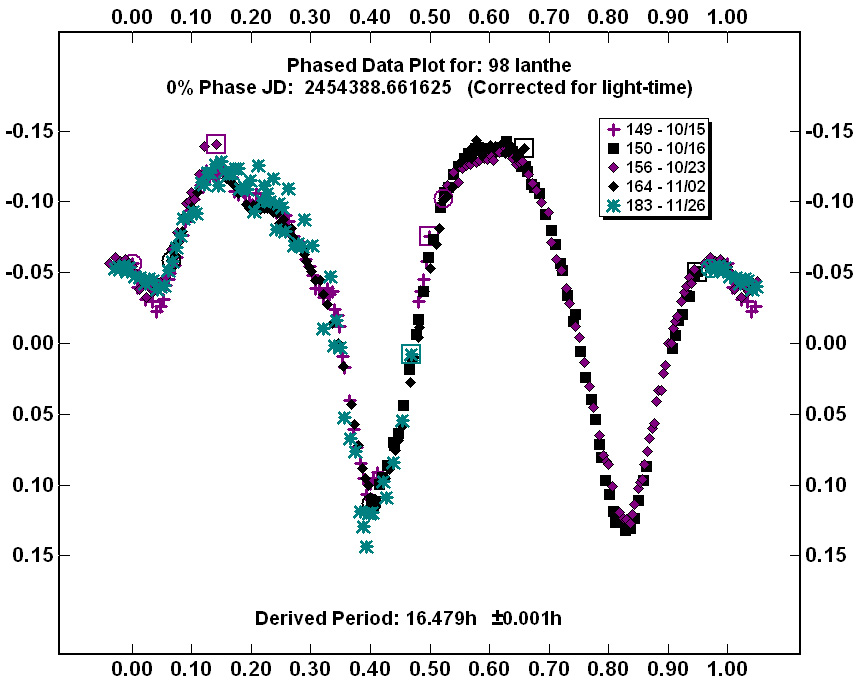
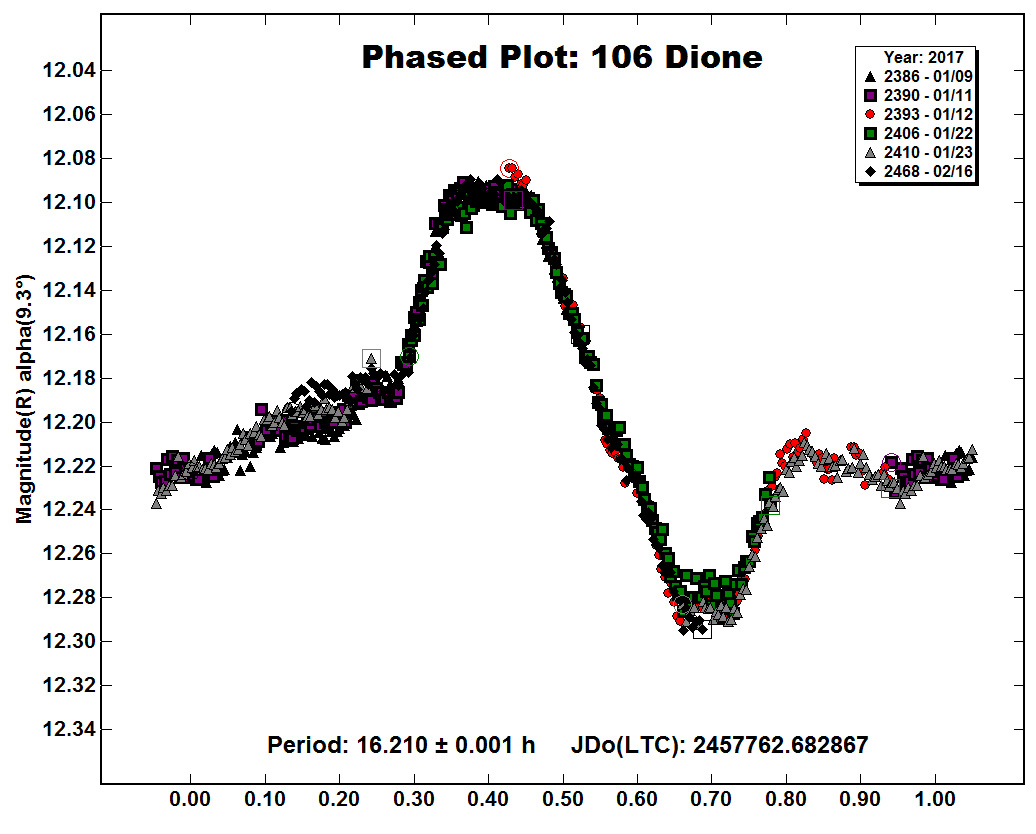
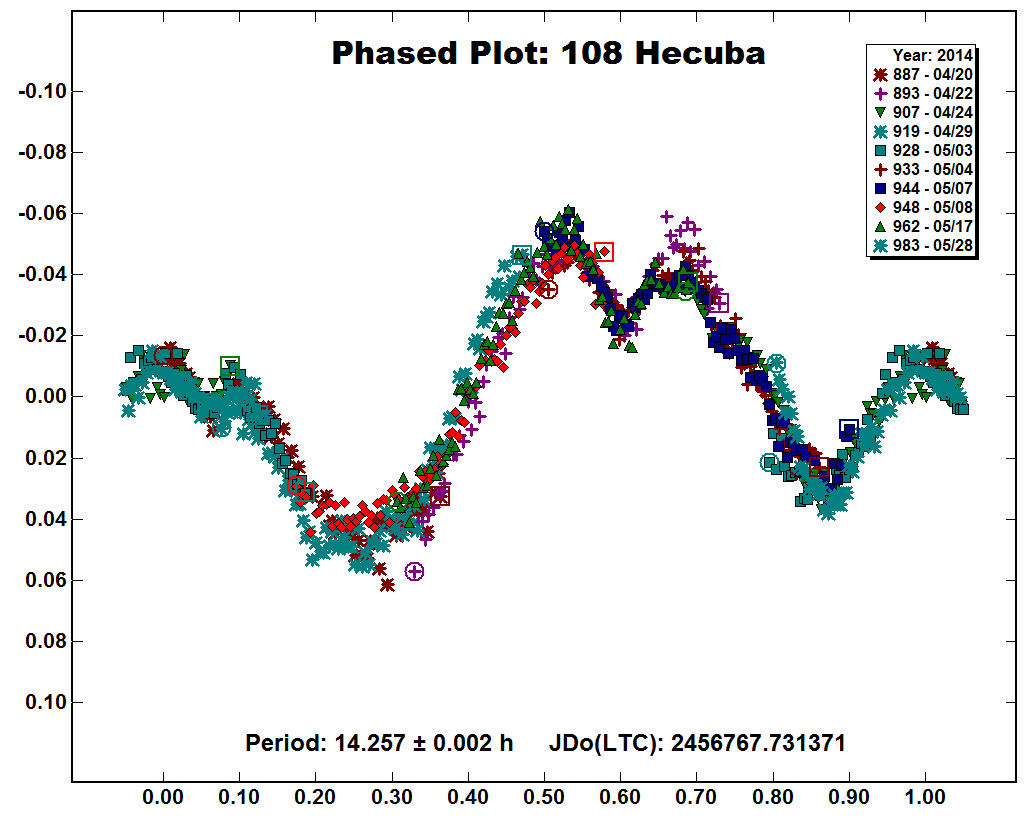
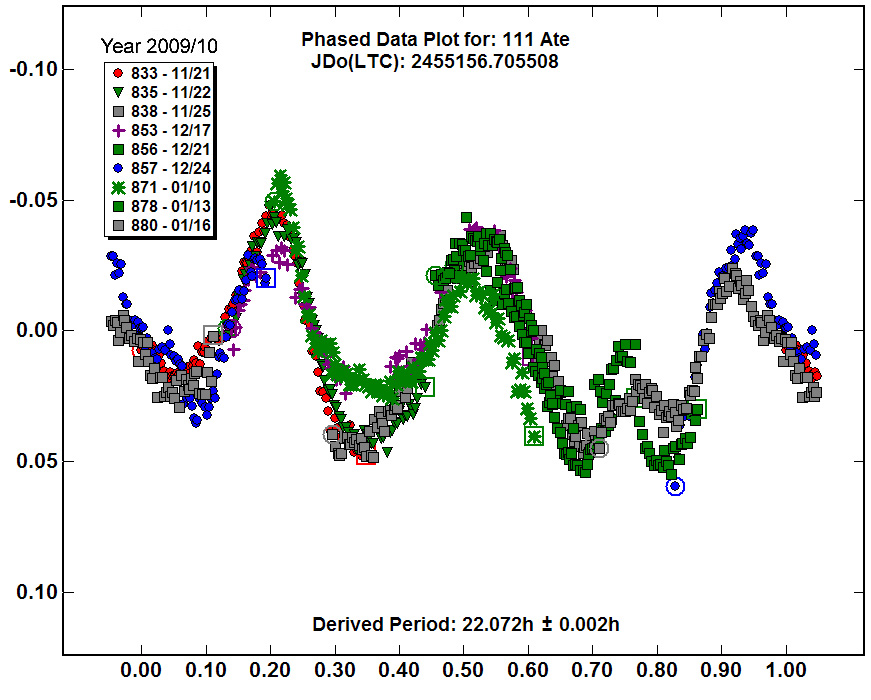
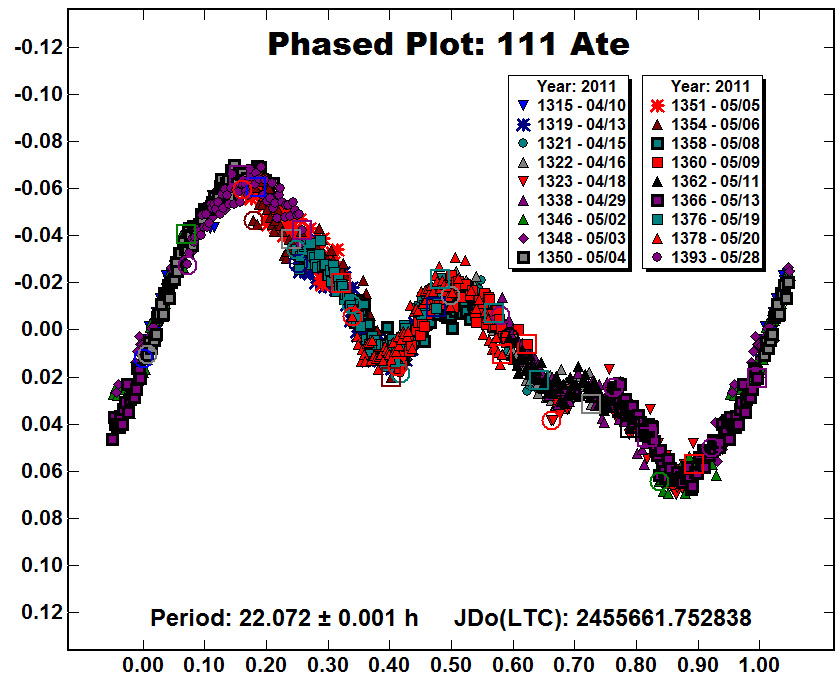
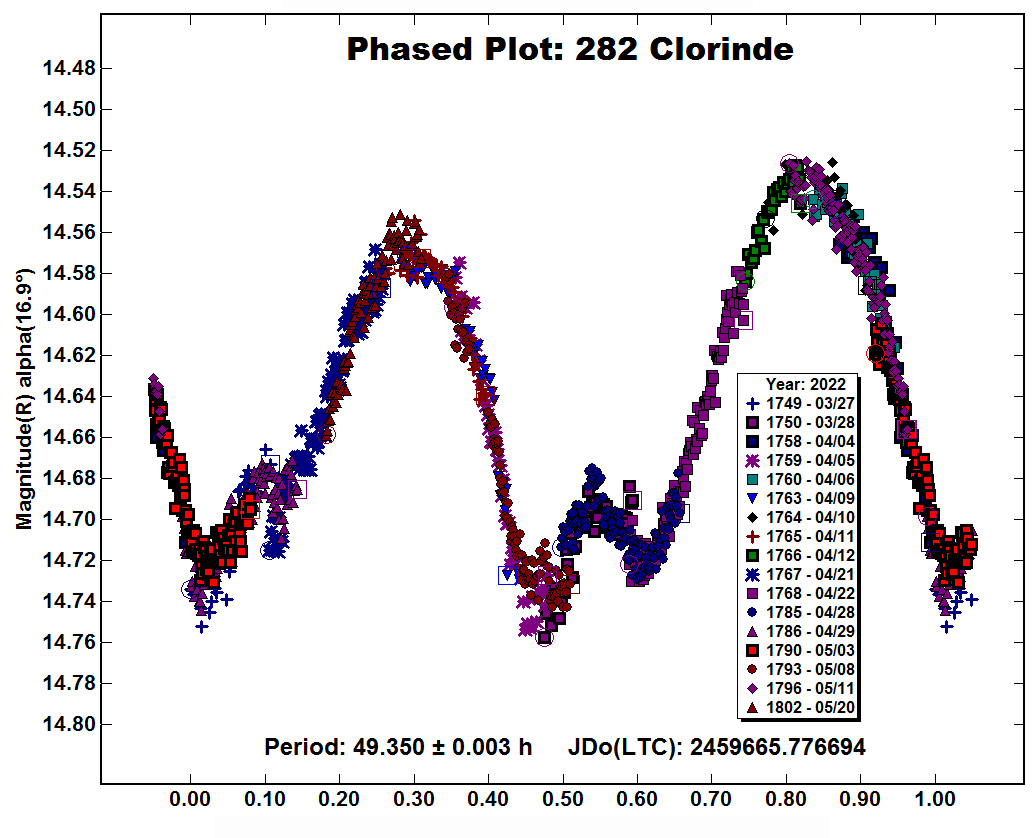
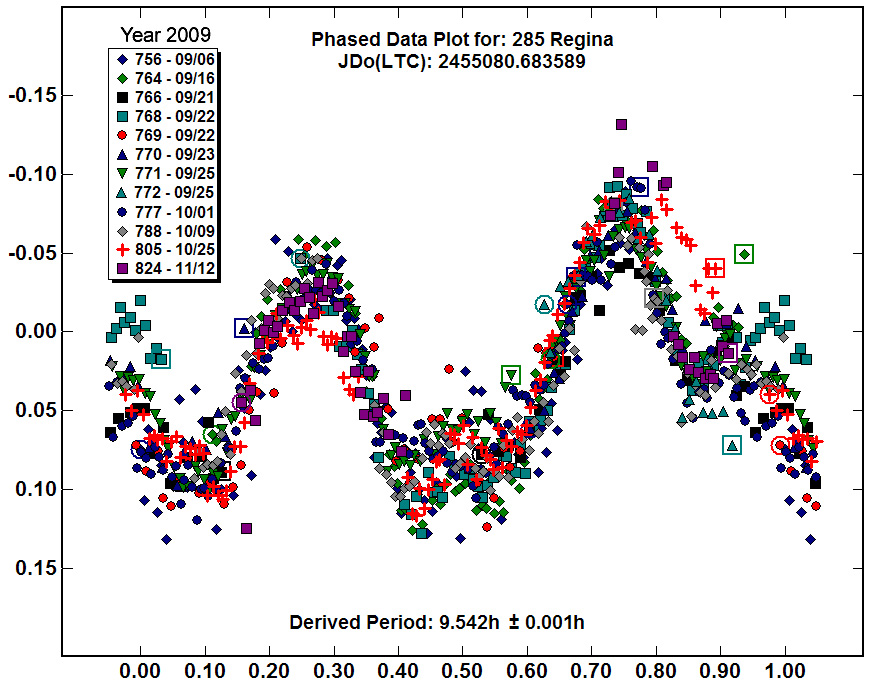
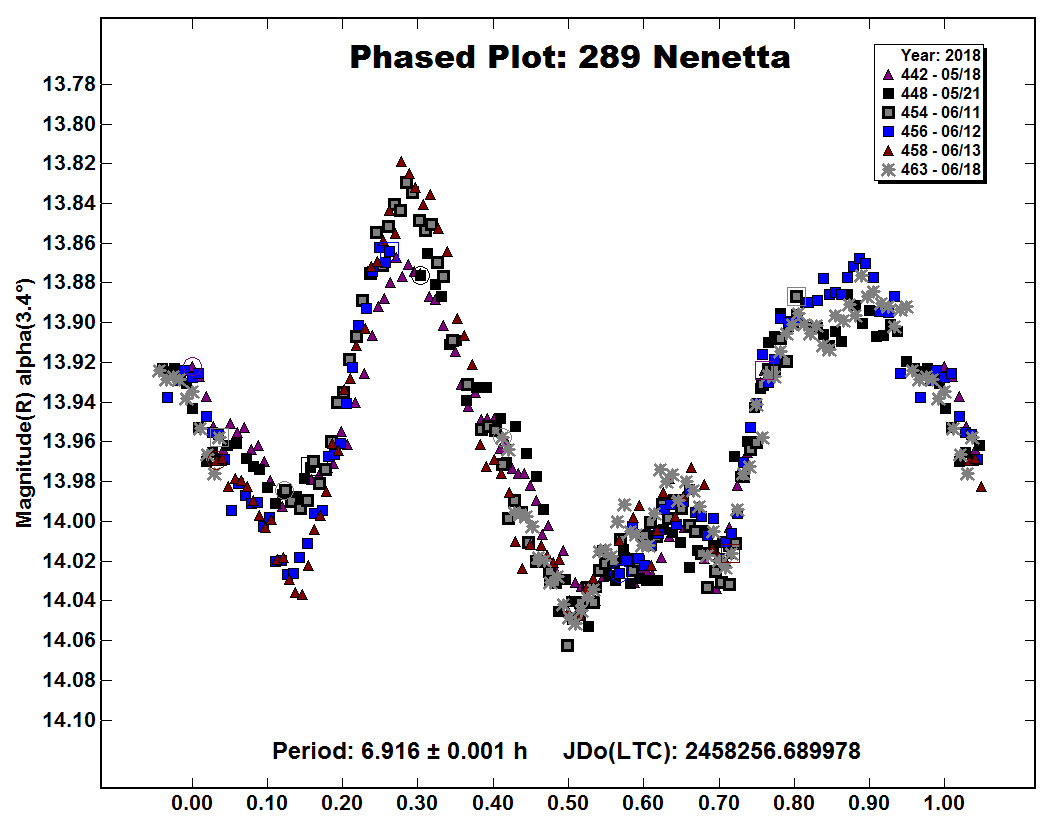
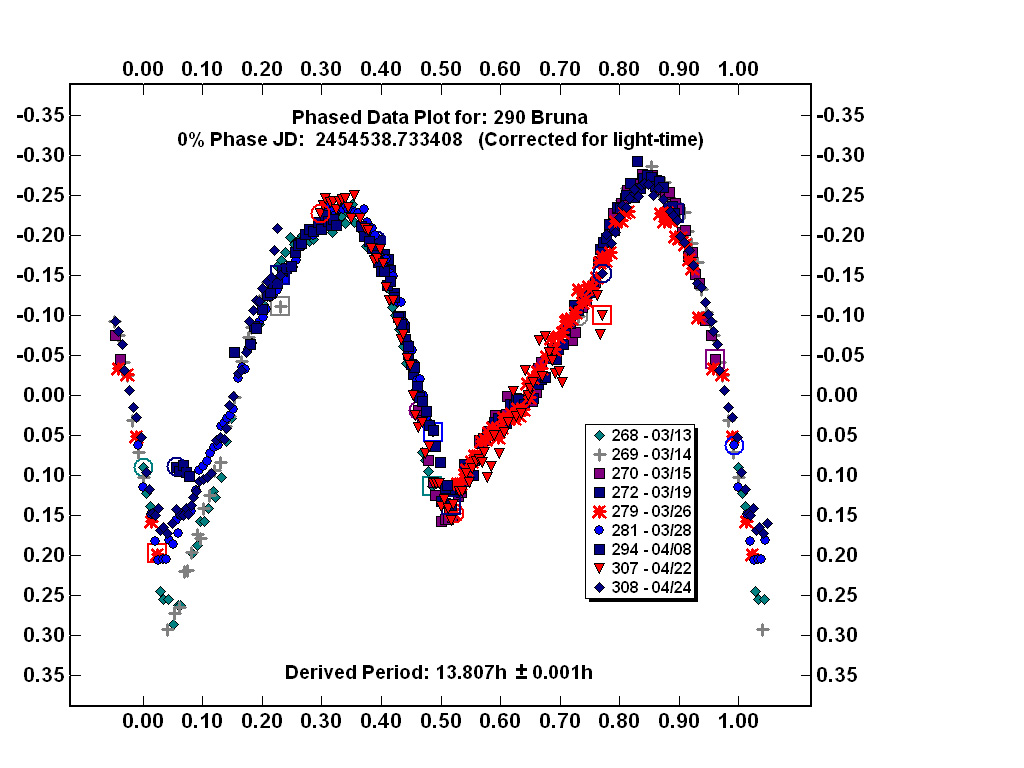
Minor Planet Lightcurve Data (data collected by ASLC member, Frederick Pilcher)
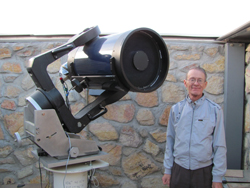 ASLC member Frederick Pilcher built and equipped the Organ Mesa Observatory in the first half of 2007 about 5 miles southeast of Las Cruces, New Mexcio, USA. This facility is dedicated to asteroid lightcurve research. The observatory itself is of sliding roof design with an adjacent climate controlled office in which the control computer is housed. Equipment consists of a Meade 14" LX200 GPS Schmidt-Cassegrain telescope, SBIG STL-1001E CCD with 1024x1024 pixels of size 24.7 micrometers and a field of 25x25 arcminutes, and Optec TCF-S temperature controlled focuser. Telescope and CCD control are by MPO Connections, and image measurement and lightcurve analysis are by MPO Canopus. Both programs are copyrighted by Brian D. Warner. MPO Canopus also constructs data files which permit the easy exchange of data with other observers for collaborative projects. ASLC member Frederick Pilcher built and equipped the Organ Mesa Observatory in the first half of 2007 about 5 miles southeast of Las Cruces, New Mexcio, USA. This facility is dedicated to asteroid lightcurve research. The observatory itself is of sliding roof design with an adjacent climate controlled office in which the control computer is housed. Equipment consists of a Meade 14" LX200 GPS Schmidt-Cassegrain telescope, SBIG STL-1001E CCD with 1024x1024 pixels of size 24.7 micrometers and a field of 25x25 arcminutes, and Optec TCF-S temperature controlled focuser. Telescope and CCD control are by MPO Connections, and image measurement and lightcurve analysis are by MPO Canopus. Both programs are copyrighted by Brian D. Warner. MPO Canopus also constructs data files which permit the easy exchange of data with other observers for collaborative projects.
Fred's intention is to obtain accurate lightcurve parameters for asteroids for which no previous period determinations have been made, or for which the existing data are insufficient to obtain secure periods. Asteroids with secure periods are also observed to contribute toward spin/shape determinations.
Observations are ordinarily begun several weeks before opposition and continued for one to two months or longer with the specific goal of obtaining a secure period with very small rms error, full multiple lightcurve coverage, and if possible eliminating all aliases. The long time interval covered for most targets aids in achieving these goals.
Collaboration with other observers is sought, especially for asteroids whose rotation periods are nearly commensurable with Earth's and for which gaps in the lightcurve are unavoidable for observations at a single location. Fred also invites correspondence with all people interested in asteroid CCD photometry and lightcurve analysis. Please address your e-mail to: fpilcher35@gmail.com.
The author thanks the following collaborators, listed alphabetically, for sharing data that enhanced the lightcurves and improved the accuracy and reliability of the derived period.
| Pietro Aceti |
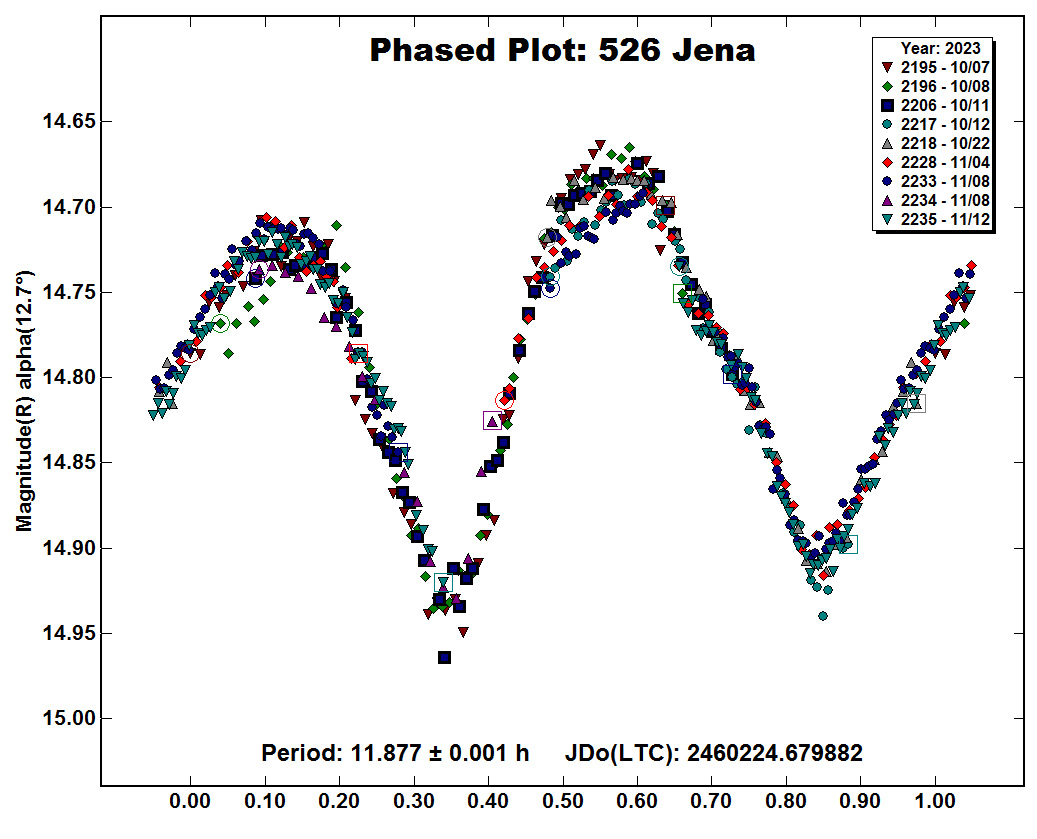
minor planet (526), 2023 |
| Ashok Aggarwal |
minor planet (163), 2014 |
| Gary Ahrendts |
minor planets (180), 2011; (247), 2012 |
| Michael Alkema |
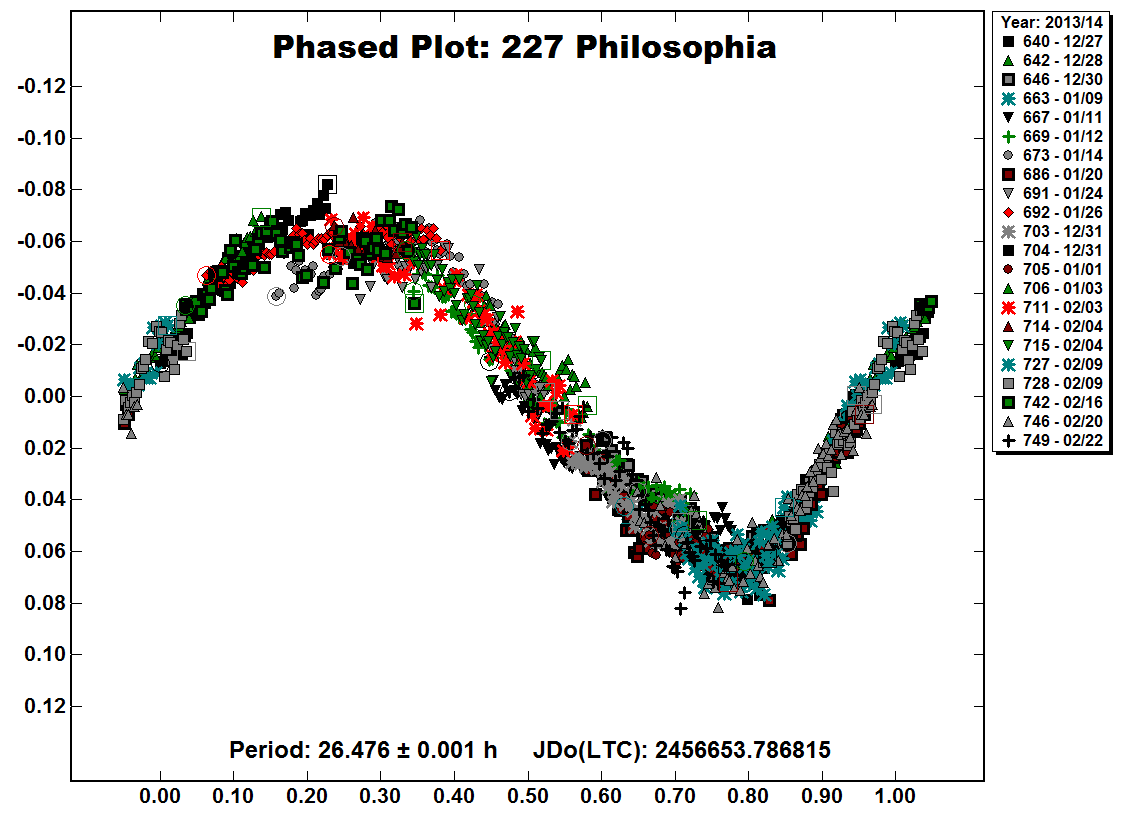
minor planet (227), 2013/14 |
| Eduardo Alvarez |
minor planets (273), 2012; (299), 2014; (457), 2014; (473), 2014; (870), 2013 |
| Paolo Bacci |
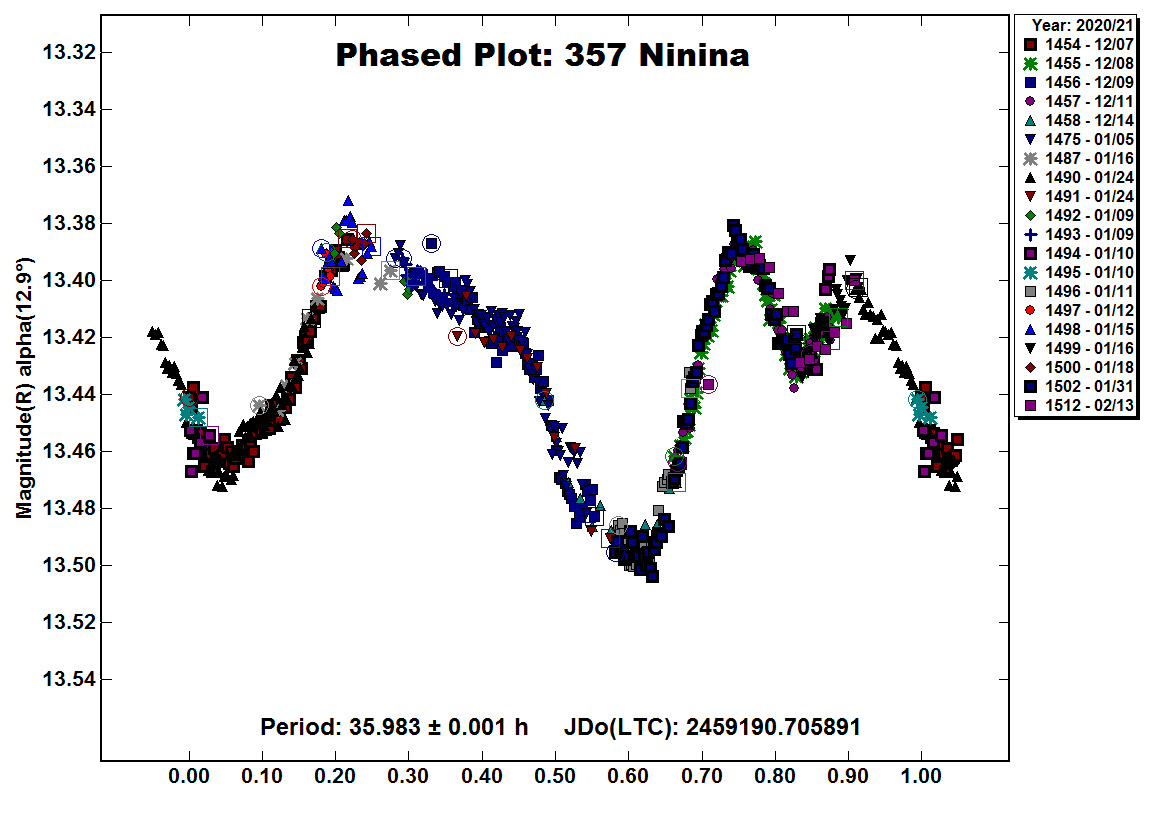
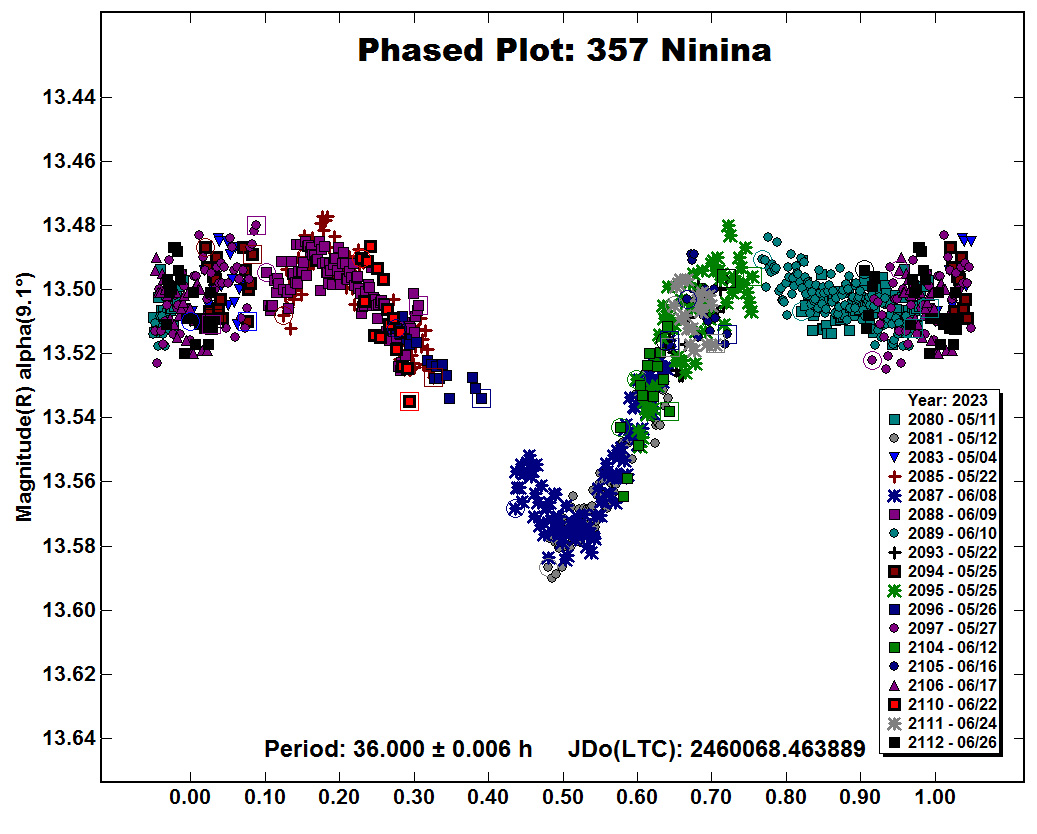
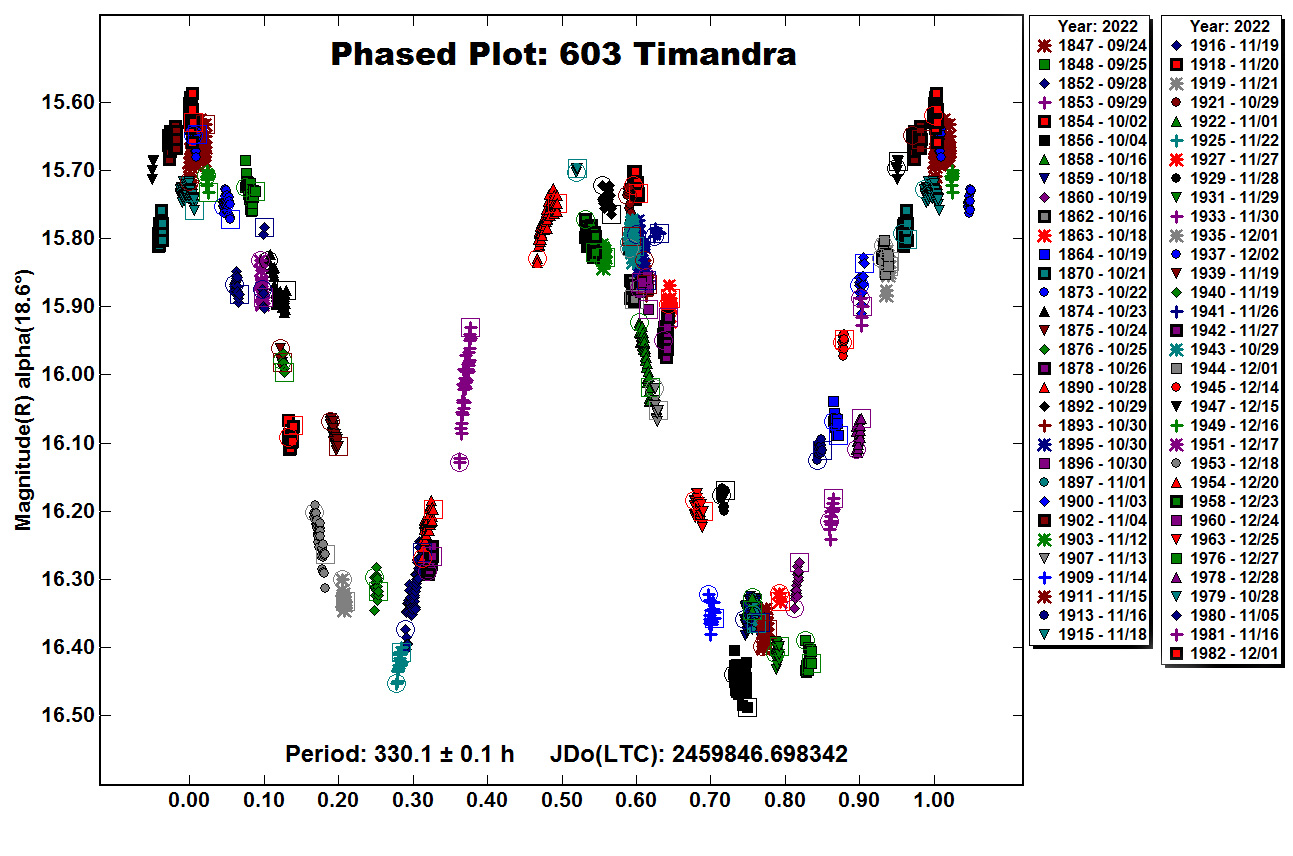
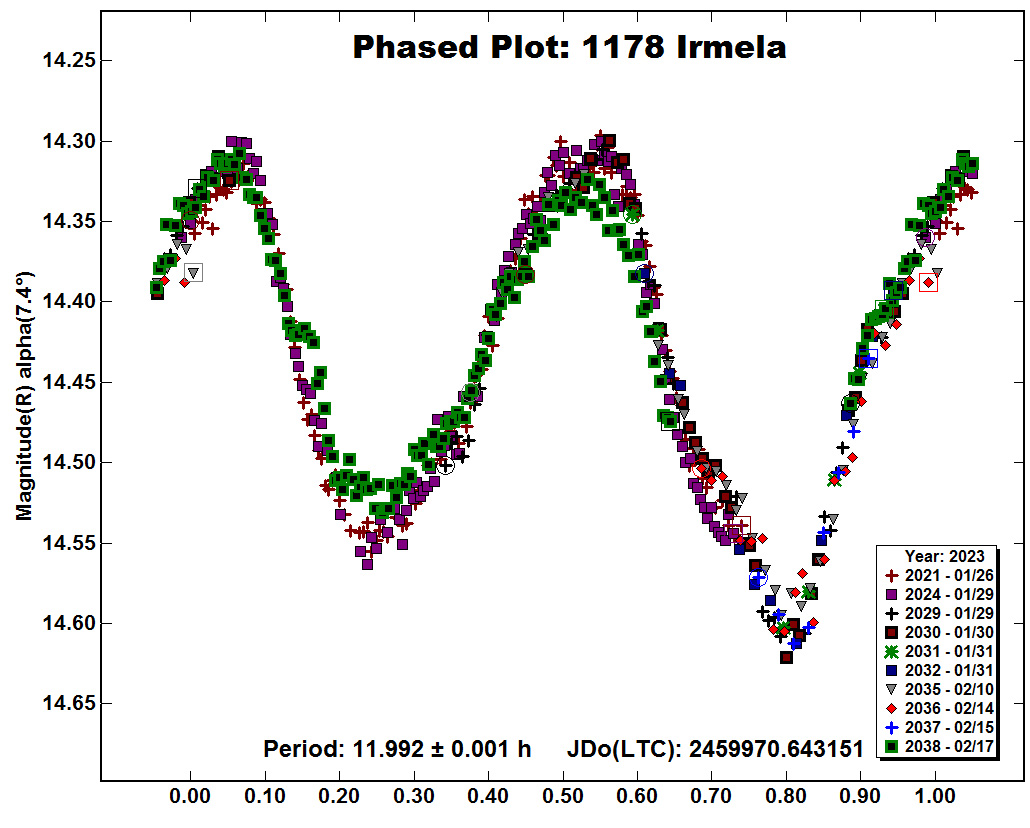
minor planets (357), 2023; (603), 2022; (1178), 2023 |
| Mauro Bachini |
minor planet (603), 2022 |
| Giorgio Baj |
minor planet (526), 2023 |
| Ronald Baker |
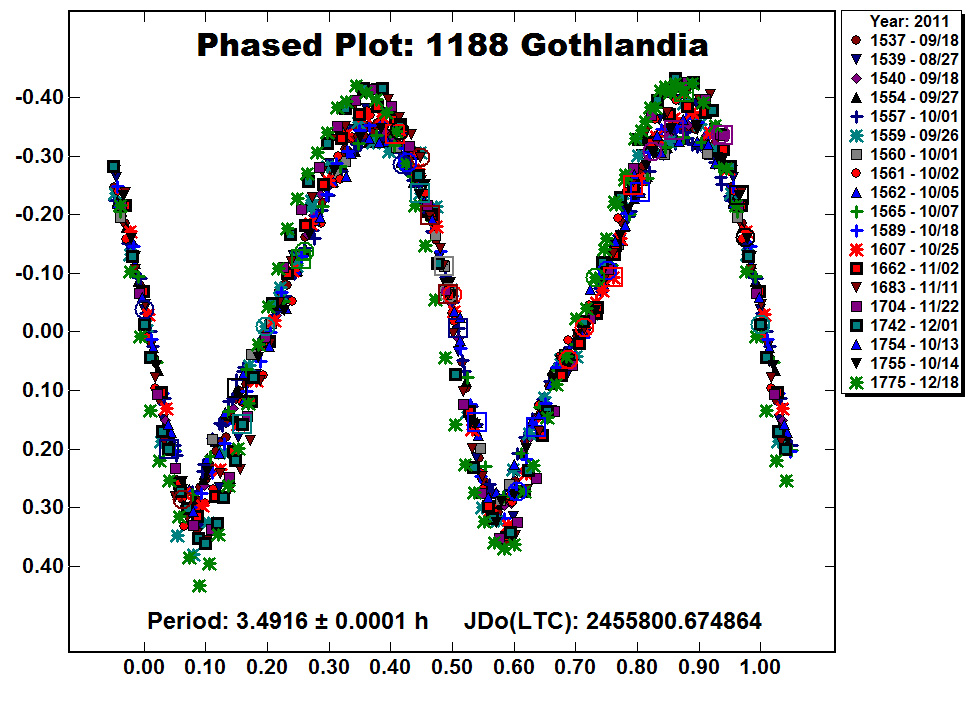
minor planet (1188), 2011 |
| Massimo Banfi |
minor planet (526), 2023 |
| Tim Barker |
minor planets (180), 2011; (247), 2012 |
| Vladimir Benishek |
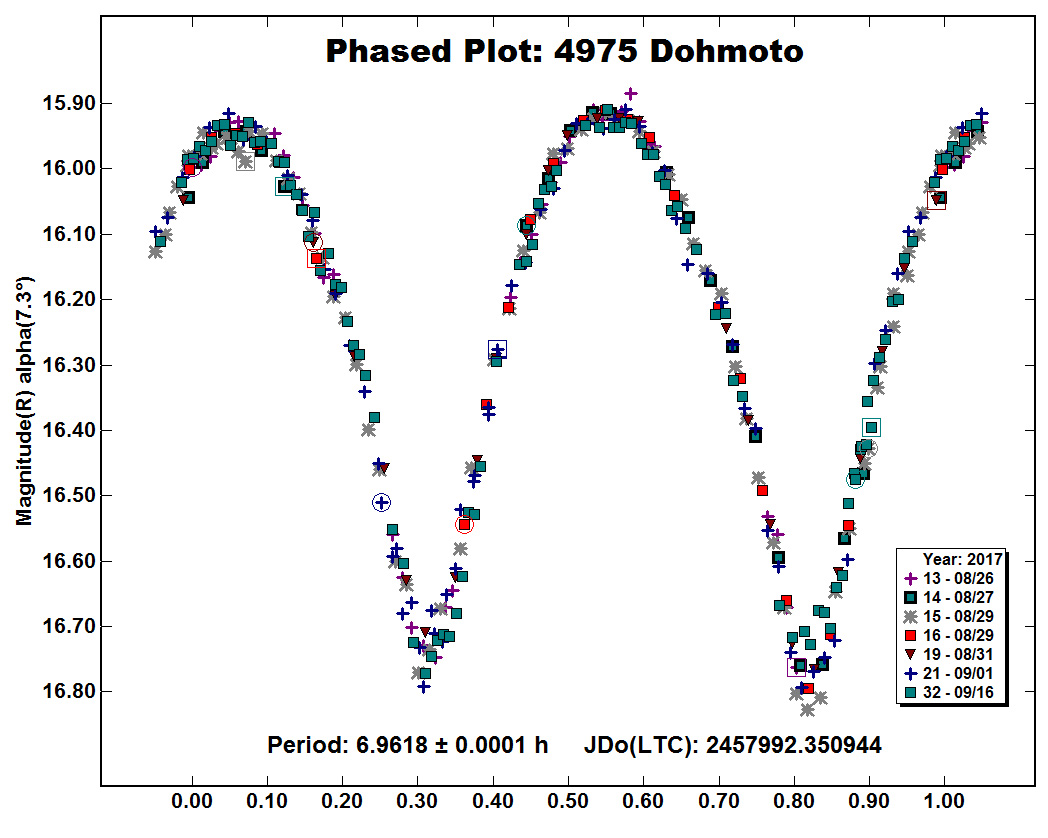
minor planets (49), 2015; (168), 2007/08; (178), 2008; (180), 2011; (182), 2008; (248), 2014; (266), 2010; (280), 2010/11; (285), 2009; (426), 2020; (460), 2017/18; (467), 2016/17; (634), 2008; (780), 2009; (805), 2024; (833), 2015; (871), 2016; (989), 2013; (1016), 2015; (1134), 2017; (1220), 2014/15; (1600), 2019; (1773), 2017; (1879), 2023; (2019), 2019; (2020), 2015; (2178), 2018; (2375), 2010; (2847), 2021; (3792), 2016; (4975), 2017; (10132), 2017; (57868), 2015 |
| Luca Bertagna |
minor planet (603), 2022 |
| Guido Betti |
minor planet (1178), 2023 |
| Roberto Bonamico |
minor planet (426), 2020 |
| John Briggs |
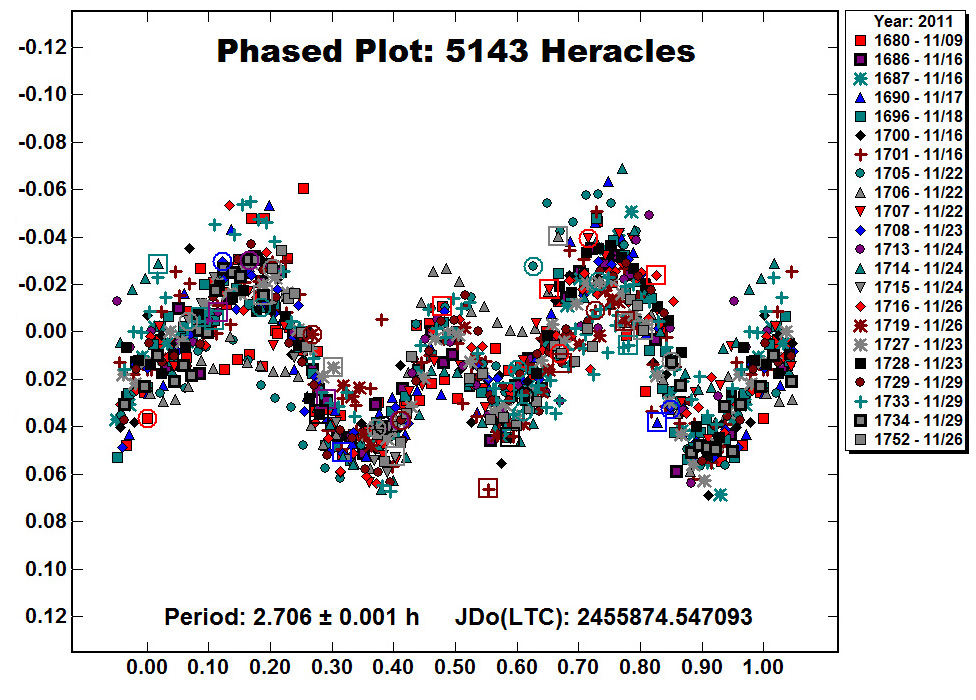
minor planets (163), 2014; (5143), 2011 |
| James Brinsfield |
minor planets (168), 2007/08; (531), 2011 |
| Jesus Delgado |
minor planets (358), 2023; (887), 2025; (1238), 2024 |
| Shelby Delos |
minor planets (180), 2011; (247), 2012 |
| Eric Dose |
minor planet (637), 2025 |
| Russell Durkee |
minor planet (668), 2011 |
| Andrea Ferrero |
minor planets (203), 2011/12; (273), 2012; (280), 2010/11; (426), 2020; (482), 2012; (582), 2013; (612), 2012; (801), 2012; (870), 2013; (978), 2014; (1110), 2014 |
| Paolo Fini |
minor planet (1178), 2023 |
| Lorenzo Franco |
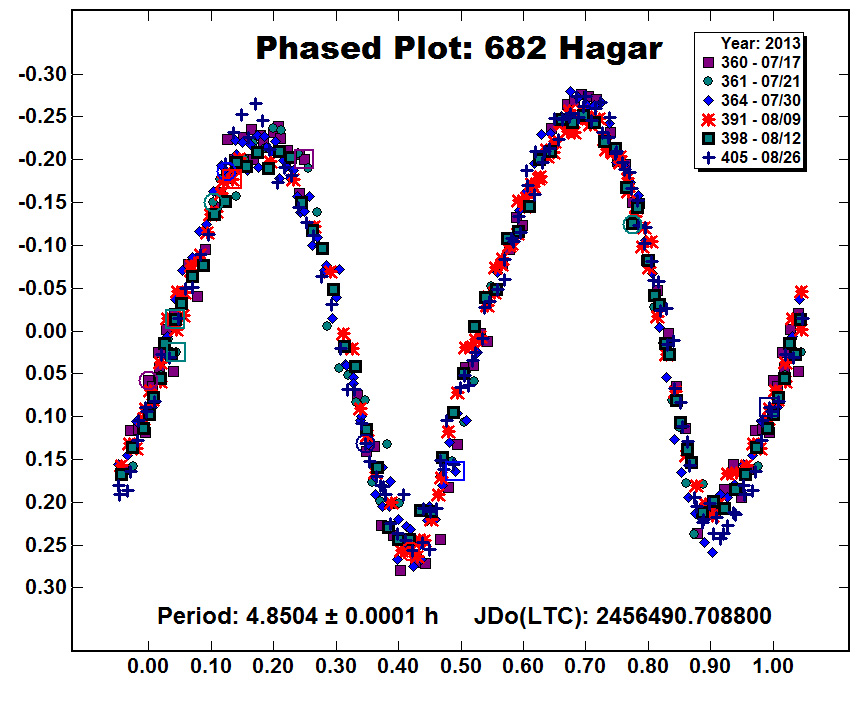
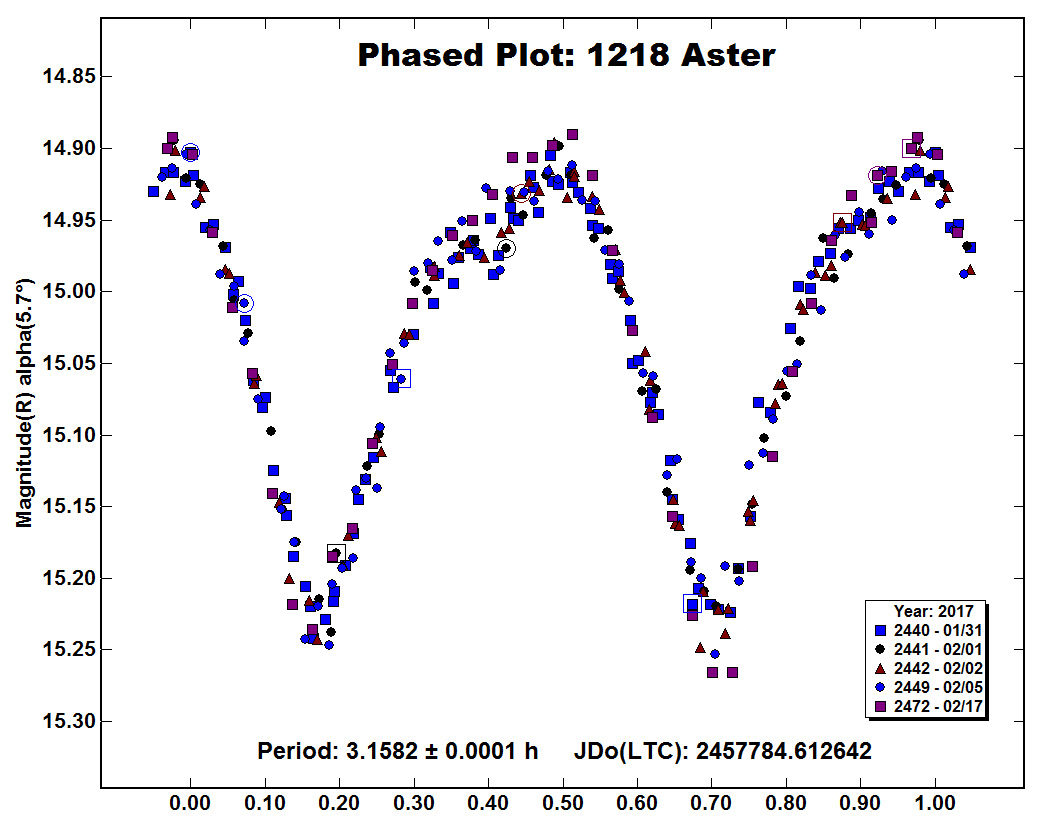
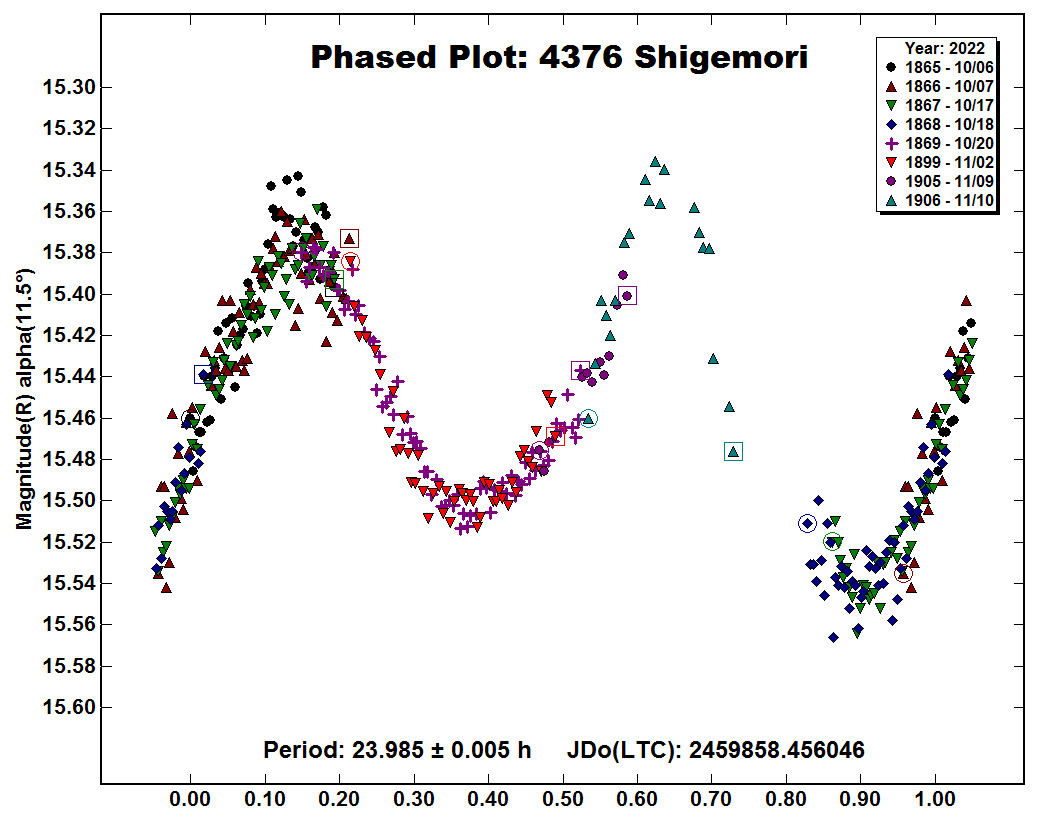
minor planets (185), 2014; (213), 2017; (357), 2020/21; (357), 2023; (526), 2023; (603), 2022; (641), 2014; (682), 2013; (748), 2020/21; (748), (805), 2024; 2021/22; (1178), 2023; (1218), 2017; (1220), 2014/15; (1269), 2024; (4376), 2022; (5143), 2011 |
| Gianni Galli |
minor planet (603), 2022 |
| Hiromi and Hiroko Hamanowa |
minor planets (180), 2011; (203), 2011/12; (280), 2010/11 |
| Jesse Hanowell |
minor planet (1110), 2014; (1220), 2014/15 |
| Wayne Hawley |
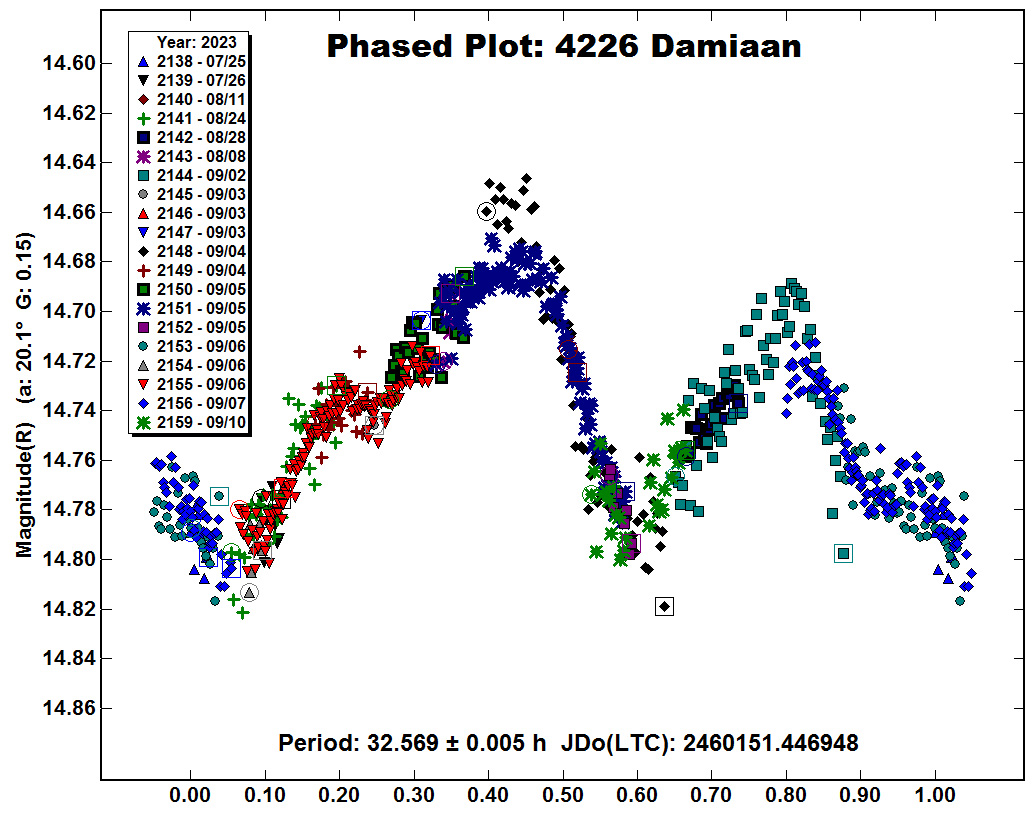
minor planets (703), 2024; (1887), 2023, (4226), 2023 |
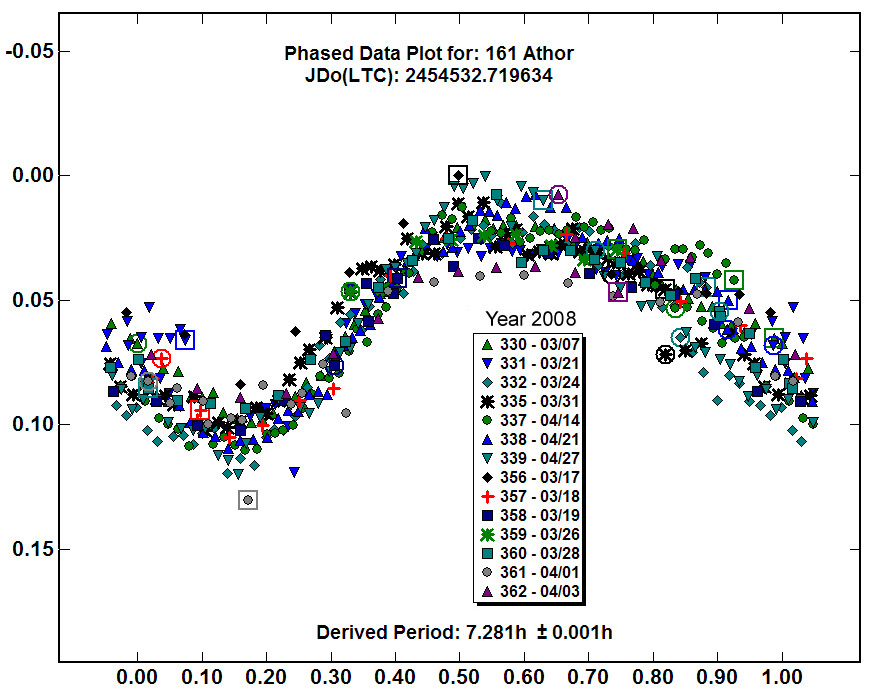
| David Higgins |
minor planets (103), 2010; (161), 2008; (180), 2011 |
| Kevin Hills |
minor planet (248), 2014 |
| Raguli Inasaridze |
minor planets (273), 2012; (801), 2012 |
| Marco Iozzi |
minor planets (357), 2023; (603), 2022 |
| Jonathan Kemp |
minor planet (426), 2020 |
| Daniel Klinglesmith |
minor planets (49), 2015; (870), 2013; (1110), 2014; (1188), 2011; (1218), 2017; (1220), 2014/15; (1744), 2019; (5143), 2011 |
| Richard Krajewski |
minor planet (182), 2008 |
| Yurij Krugly |
minor planets (273), 2012; (801), 2012 |
| Martina Maestripieri |
minor planets (357), 2023; (603), 2022; (1178), 2023 |
| Massimiliano Mannucci |
minor planet (357), 2023 |
| Alessandro Marchini |
minor planets (357), 2020/21; (357), 2023; (449), 2018/19; (526), 2023; (603), 2022; (748), (805), 2024; 2021/22; (1178), 2023; (1237), 2024/25; (4376), 2022; (13441), 2024 |
| Anna Marciniak |
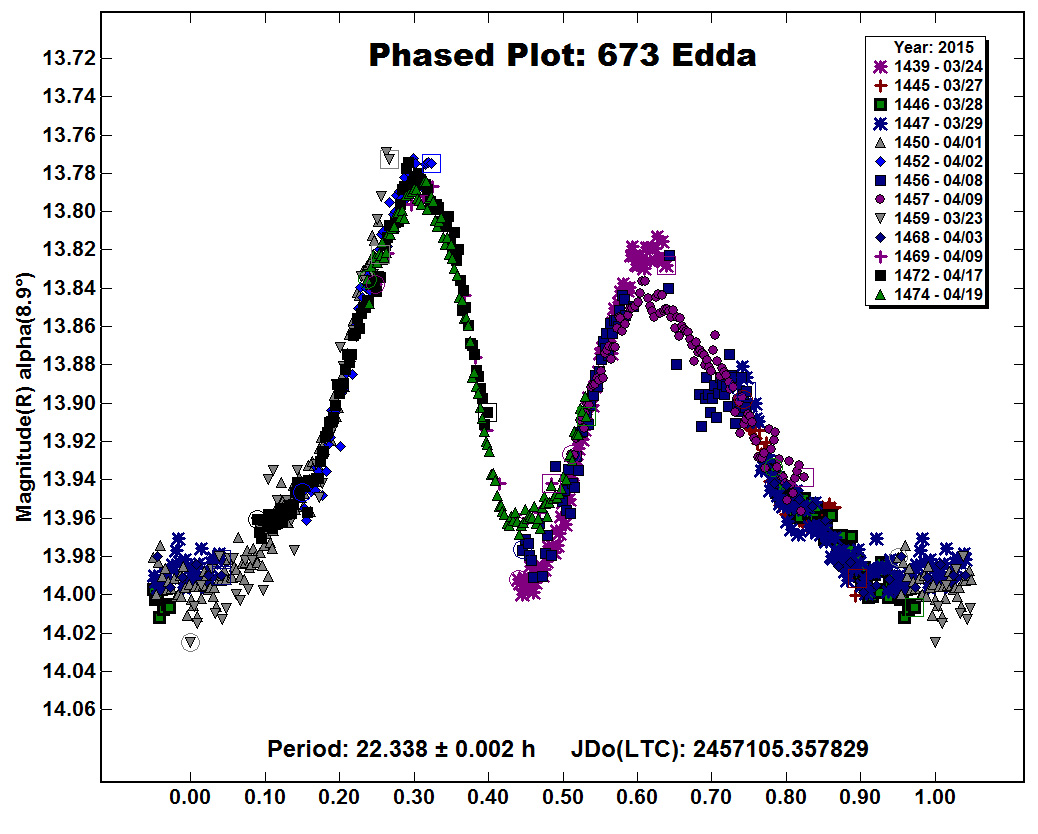
minor planets (70), 2015/16; (219), 2014; (279), 2014/15; (329), 2013; (393), 2017; (397), 2017; (483), 2013; (551), 2016; (673), 2015; (806), 2013; (995), 2013/14 |
| Luis Martinez |
minor planets (198), 2011/12; (318), 2015; (335), 2015; (393), 2017; (641), 2013; (668), 2011; (827), 2012; (989), 2013 |
| Nico Montigiani |
minor planet (357), 2023 |
| Caroline Odden |
minor planets (163), 2014; (213), 2017; (1016), 2015; (1220), 2014/15 |
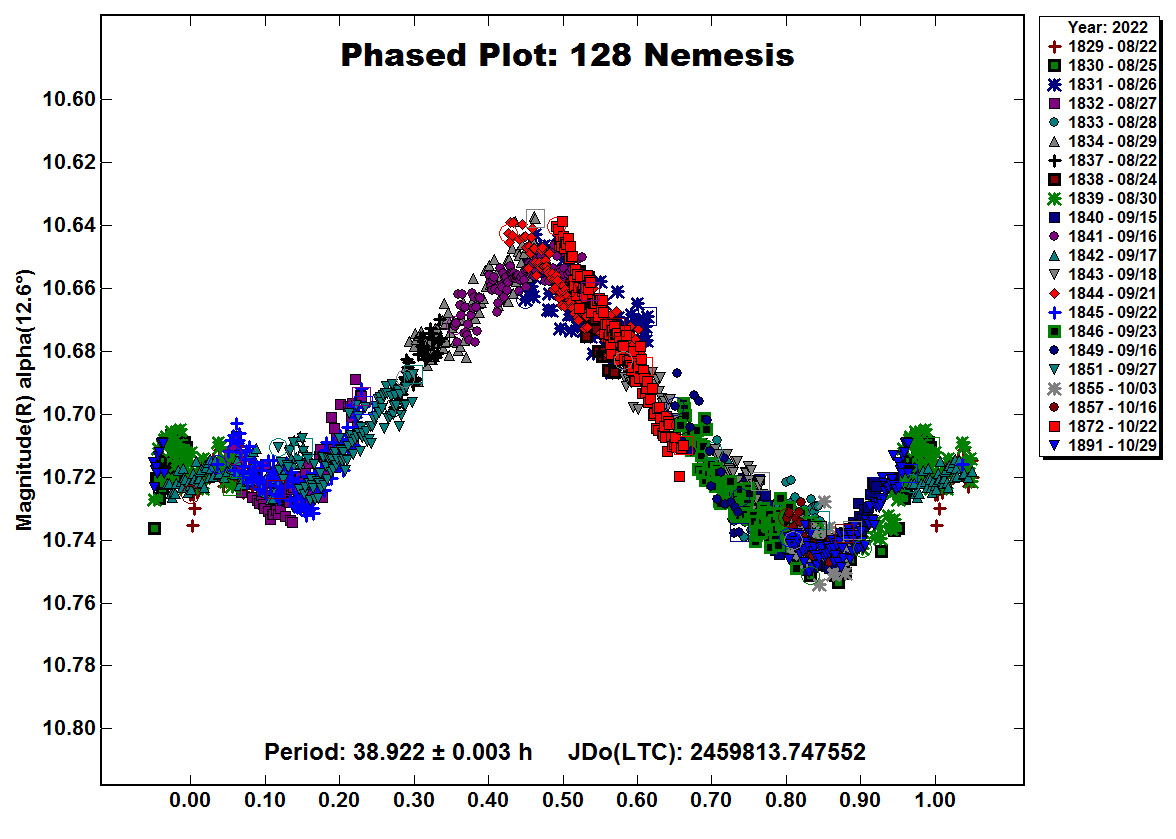
| Julian Oey |
minor planets (128), 2022; (178), 2008; (273), 2012; (310), 2010; (357), 2020/21; (393), 2017; (482), 2012; (582), 2013; (748), 2020/21; (748), 2021/22; (801), 2012; (805), 2024; (870), 2013; (871), 2016; (1238), 2024; (1269), 2024; (1744), 2019; (4376), 2022 |
| Ricardo Papini |
minor planets (357), 2023; (426), 2020; (603), 2022; (748), 2021/22; (1237), 2024/25; (4376), 2022; (13441), 2024 |
| Tom Polakis |
minor planet (470), 2020 |
| Nello Ruocco |
minor planets (357), 2023; (805), 2024 |
| John Ruthroff |
minor planets (185), 2011; (185), 2014 |
| Giulio Scarfi |
minor planets (357), 2023; (1178), 2023 |
| Robert Stephens |
minor planets (65), 2009; (169), 2009; (280), 2010/11 |
| Luca Pietro Strabla |
minor planets (273), 2012; (308), 2014; (560), 2013; (561), 2012; (621), 2012; (801), 2012 |
| Alessio Squilloni |
minor planet (603), 2022 |
| Geoff Stone |
minor planet (887), 2025 |
| Giacomo Succi |
minor planet (603), 2022 |
| Maura Tombelli |
minor planet (603), 2022 |
| Angela Vargas |
minor planet (870), 2013 |
| Brian D. Warner |
minor planet (582), 2013 |
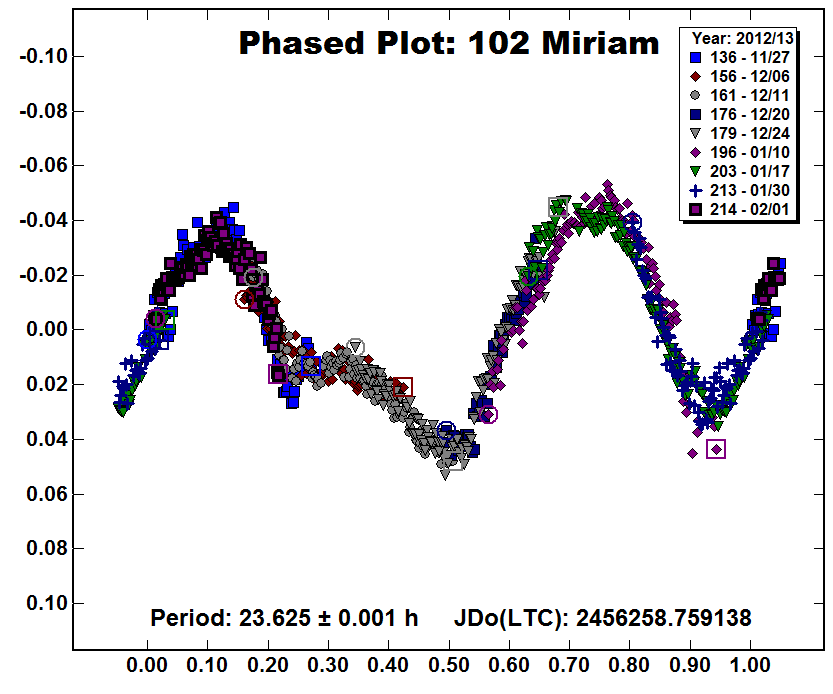
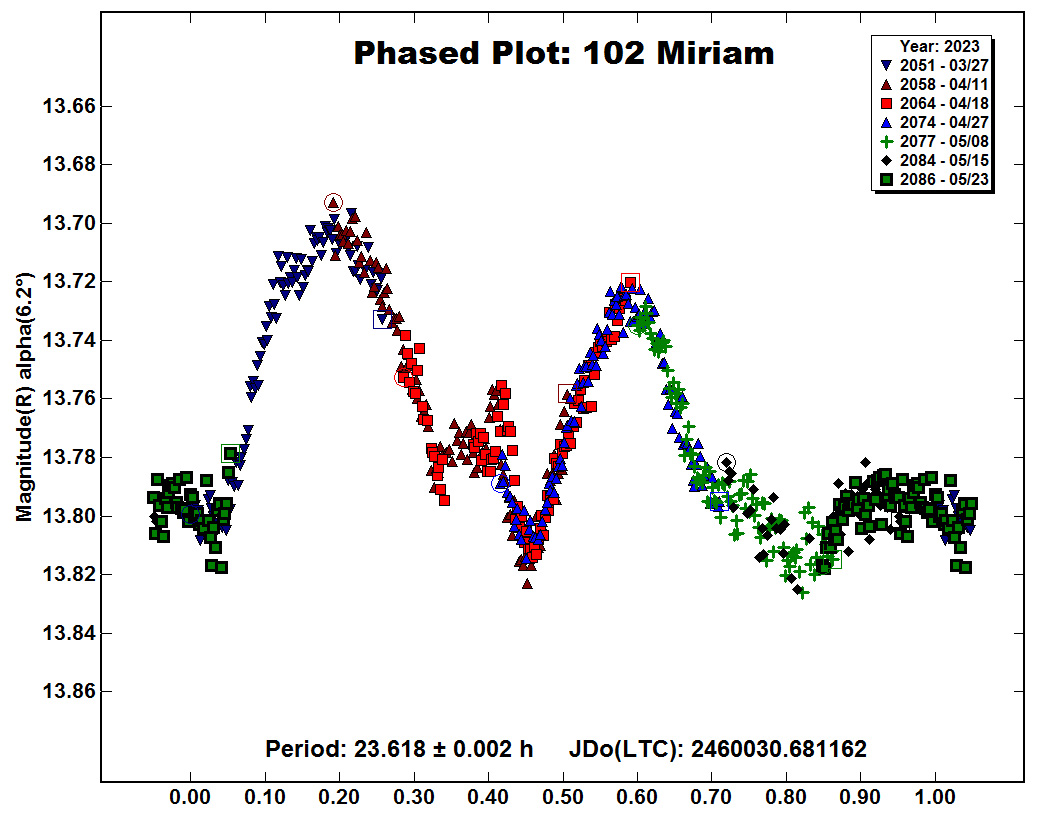
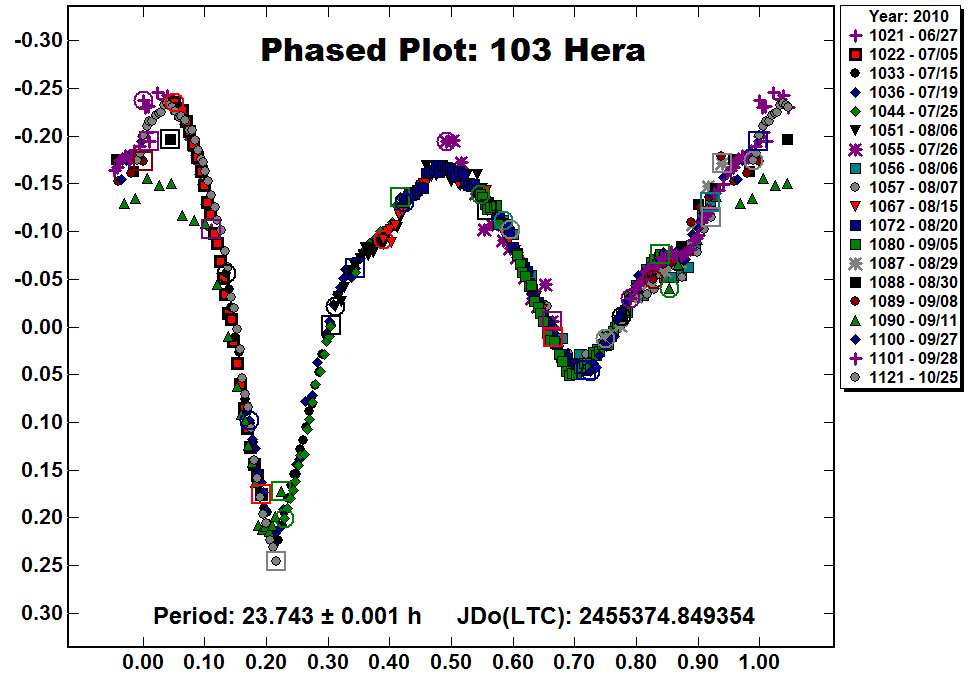
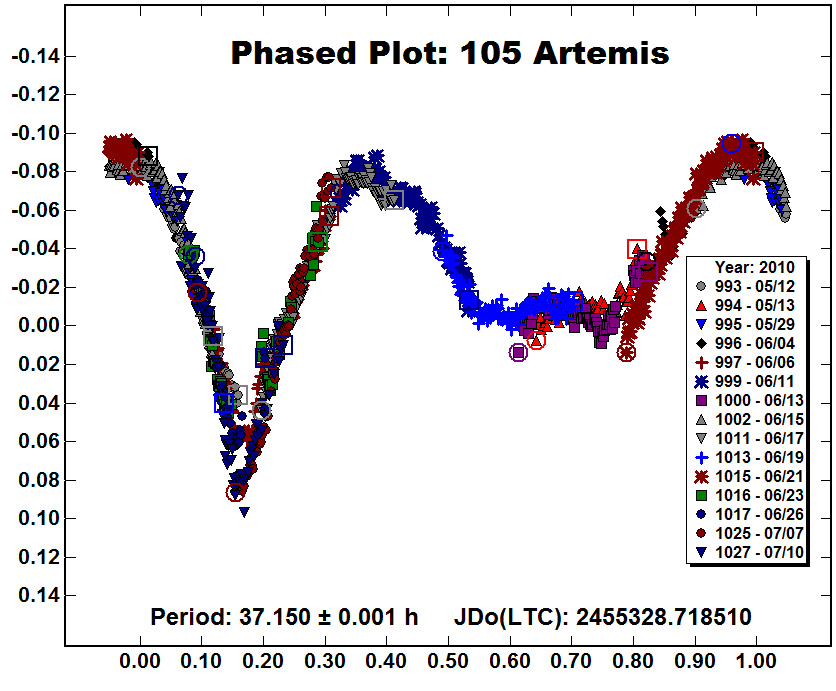
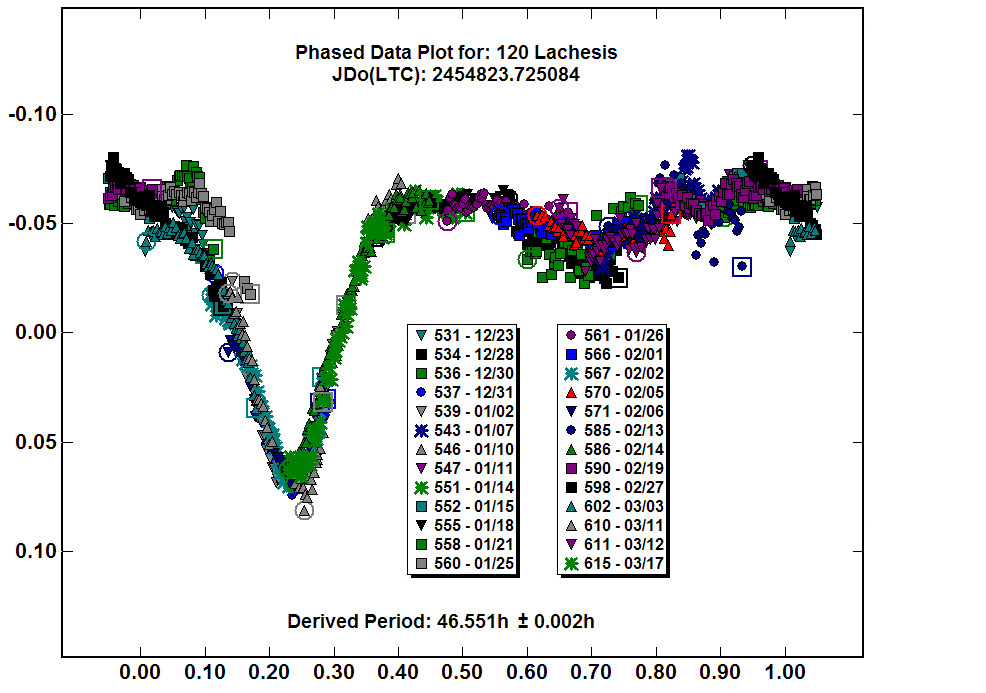
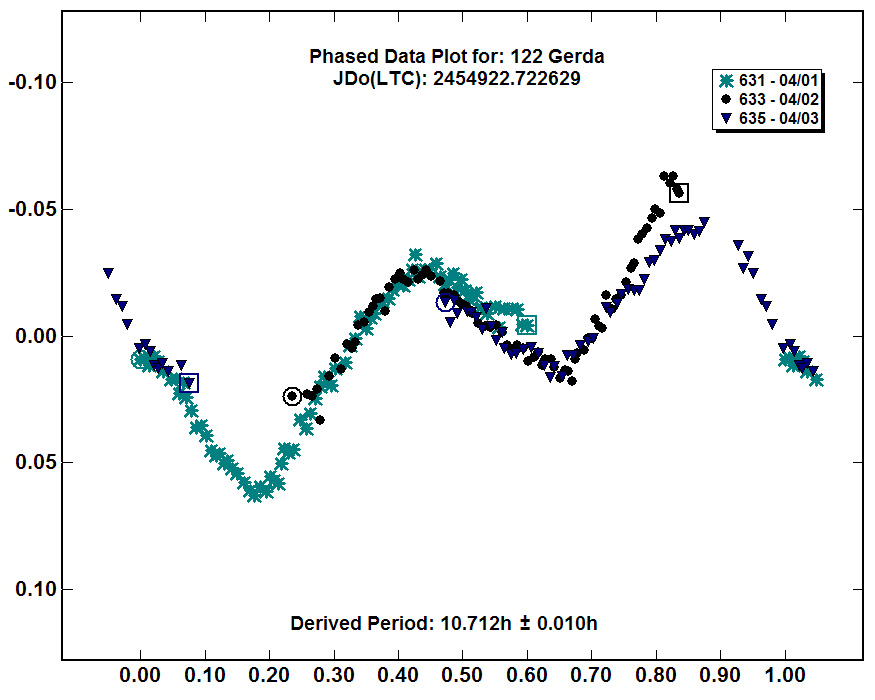
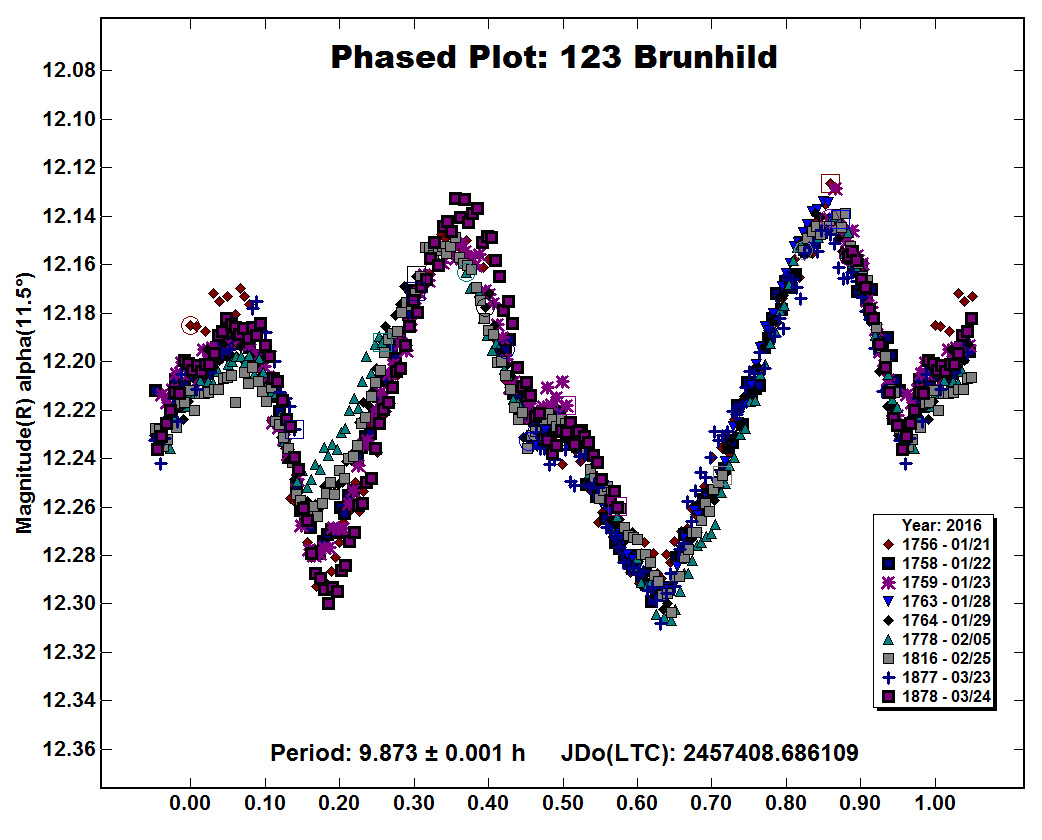
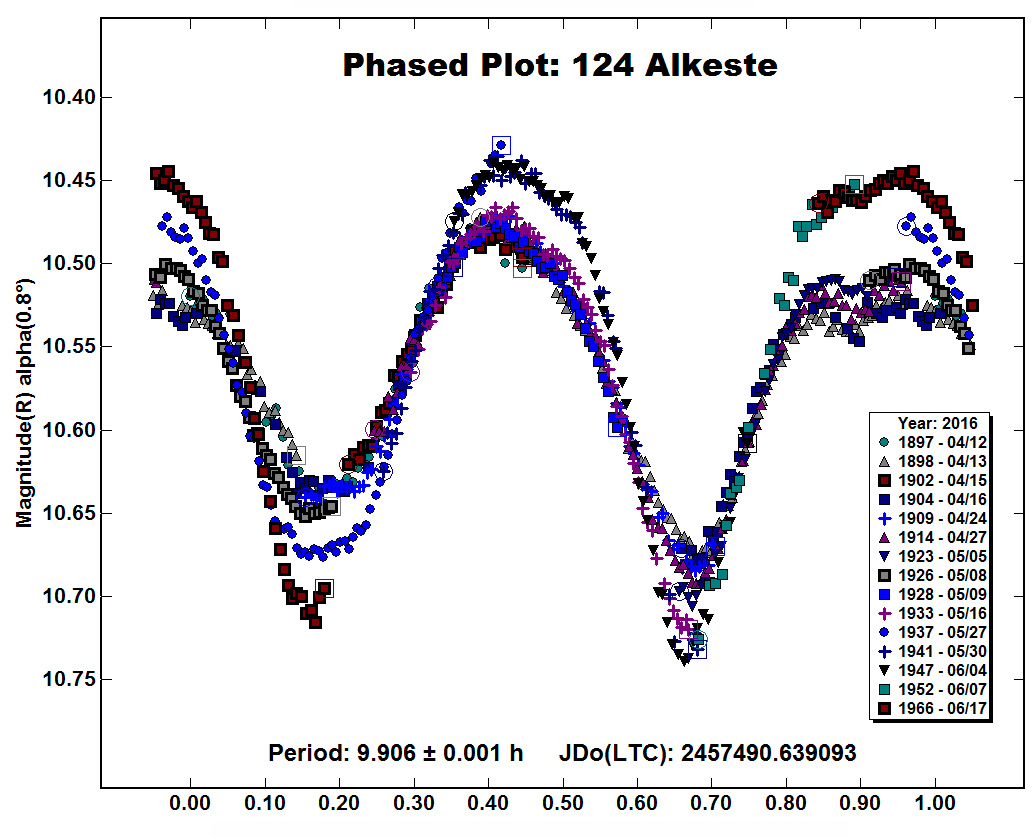
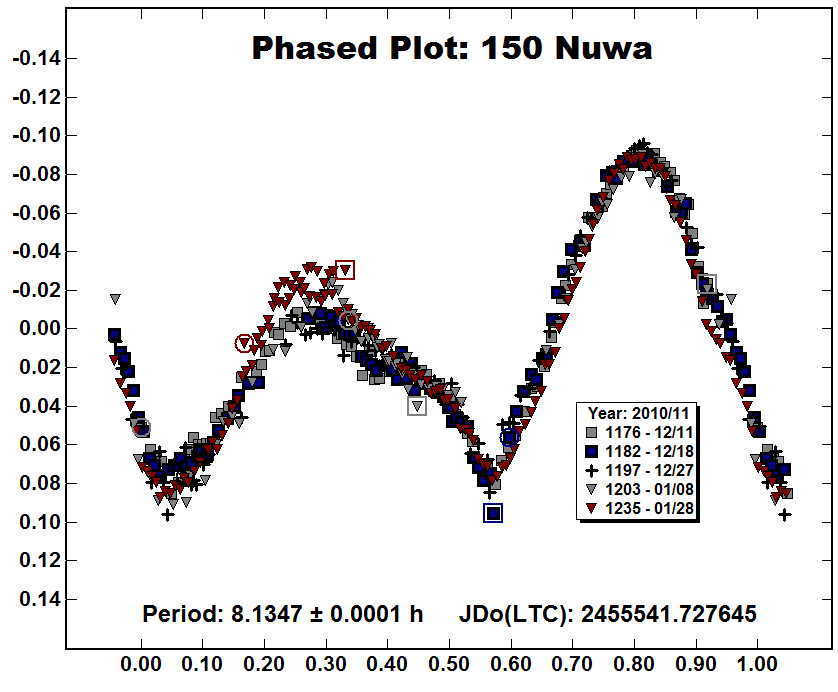
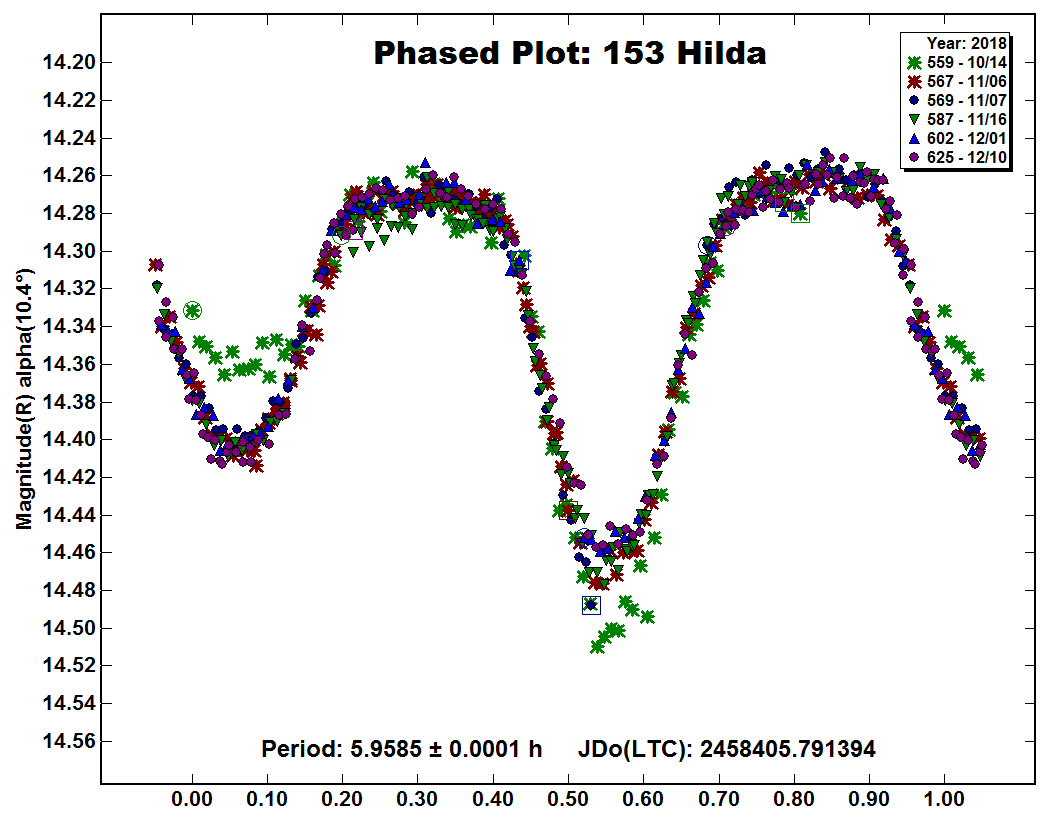
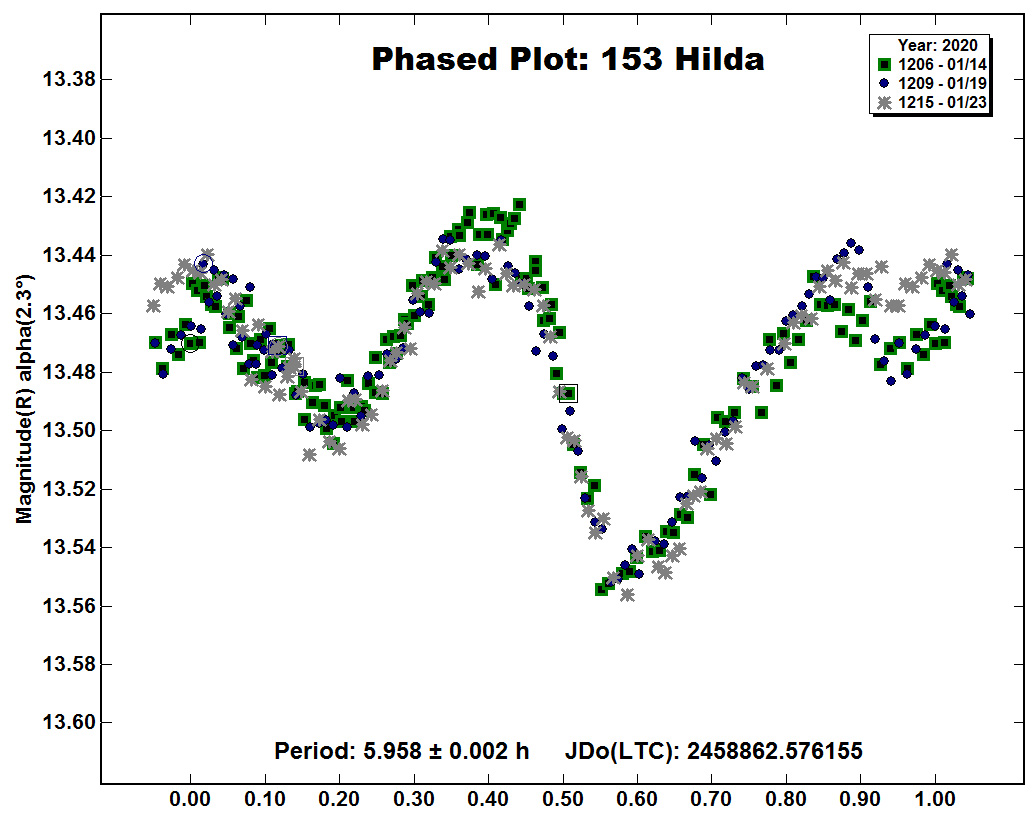
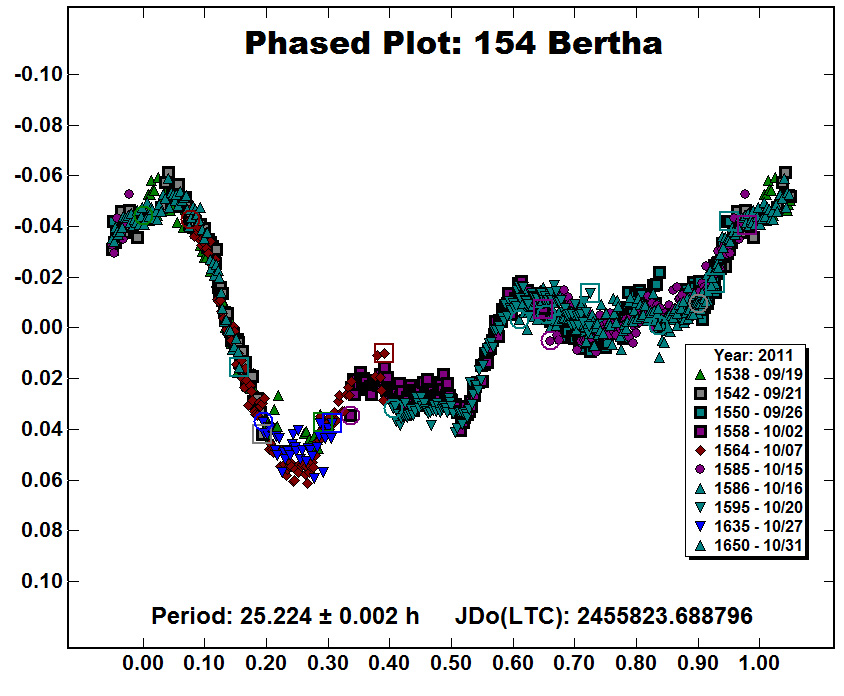
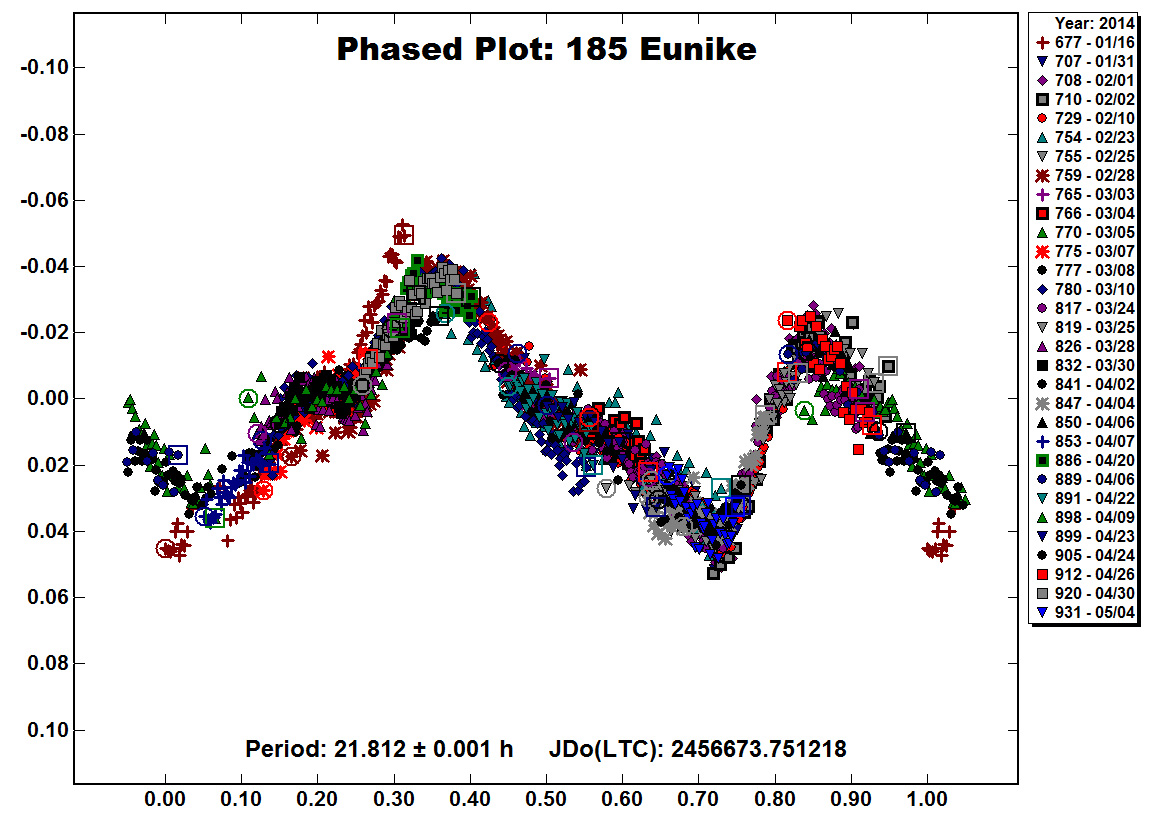
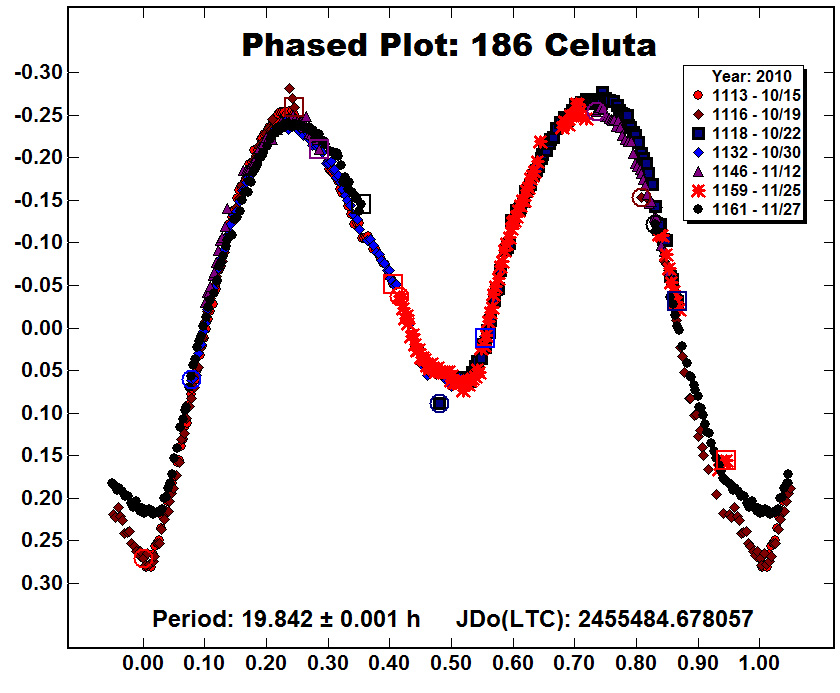
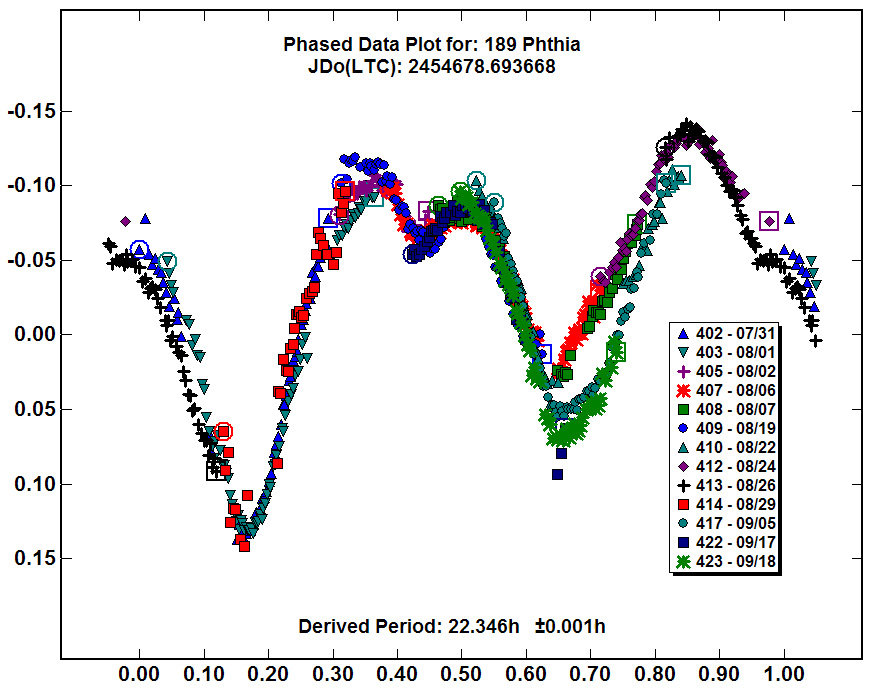
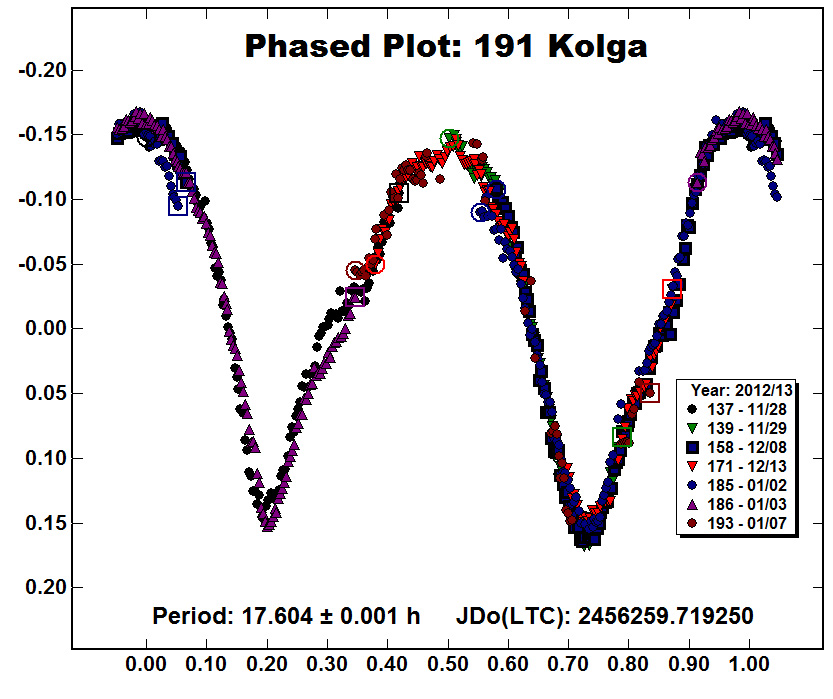
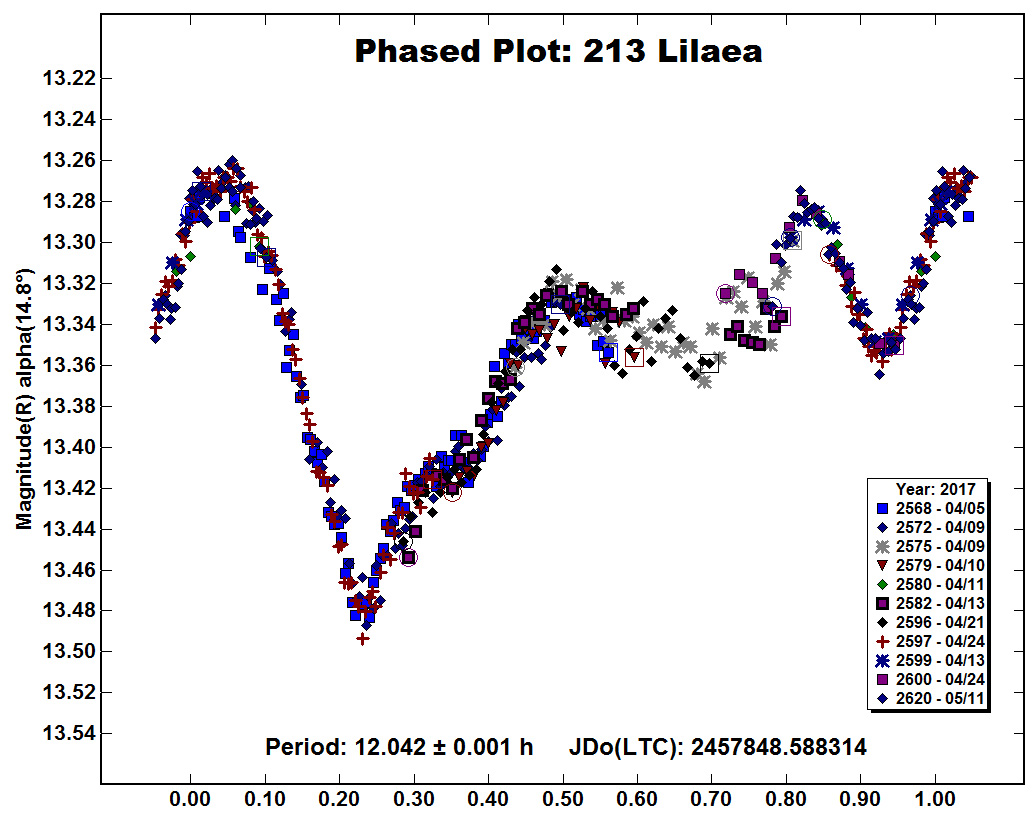
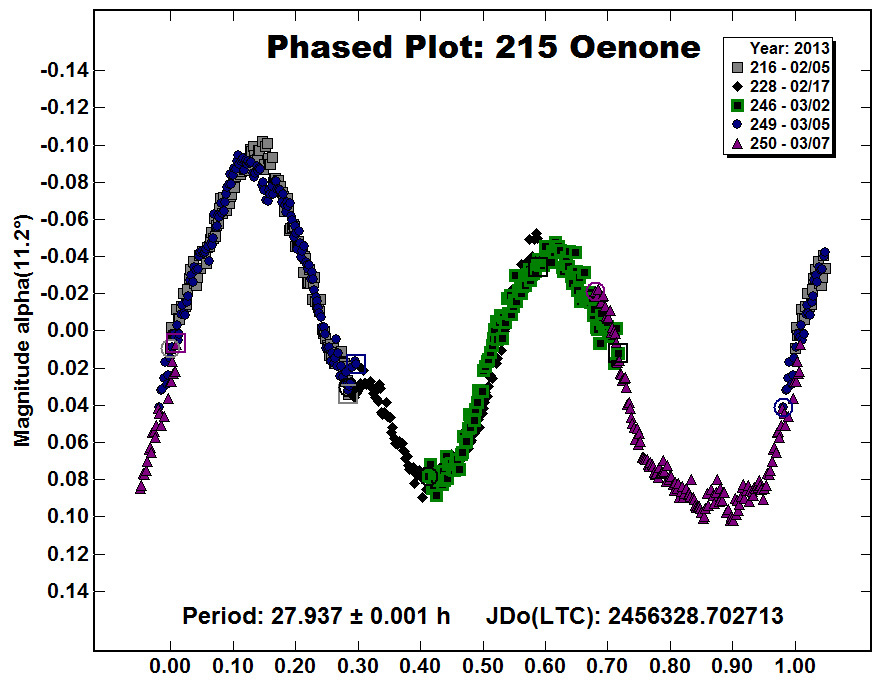
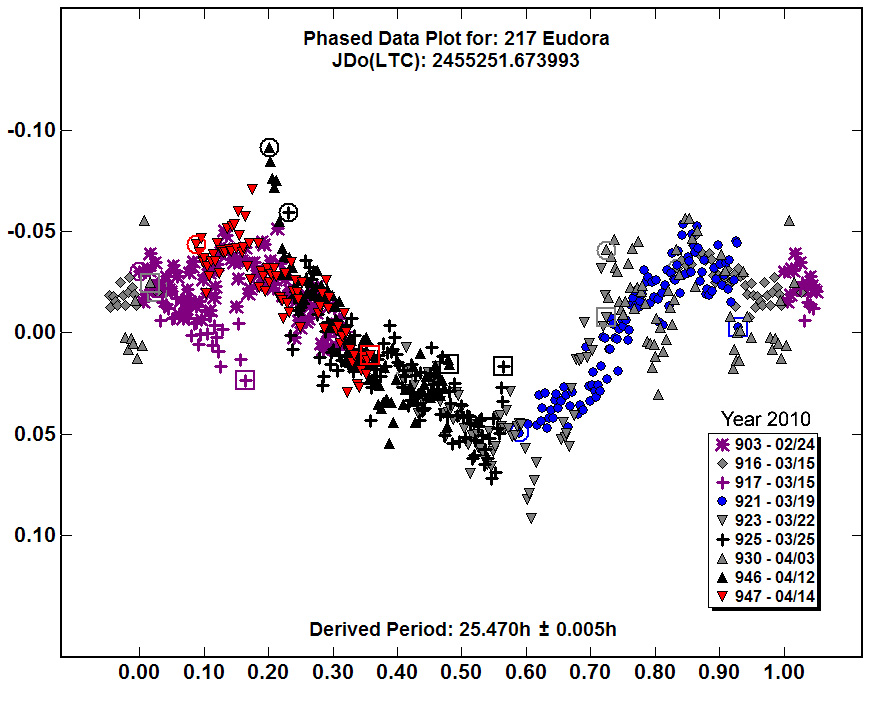
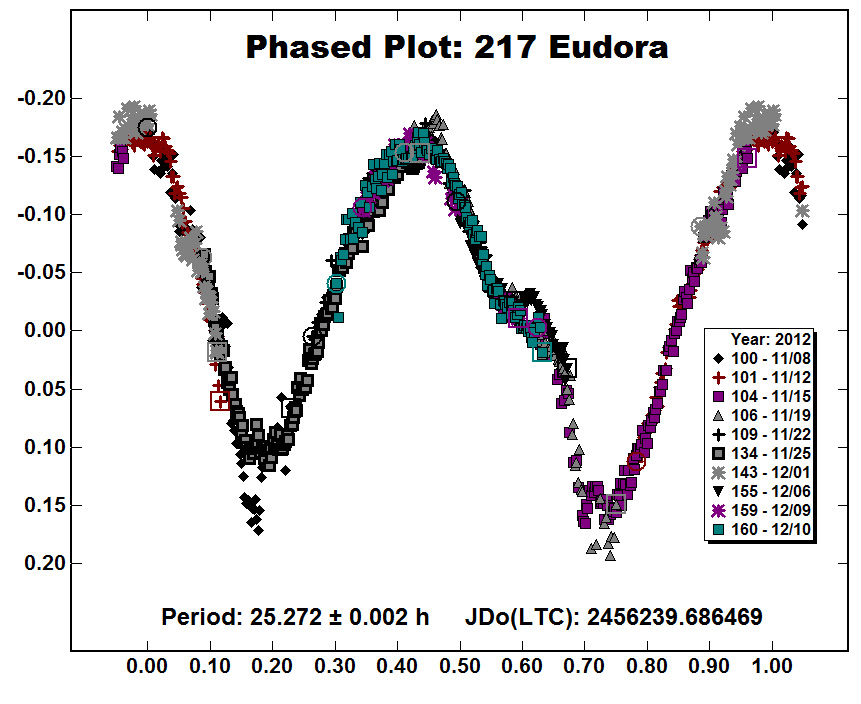
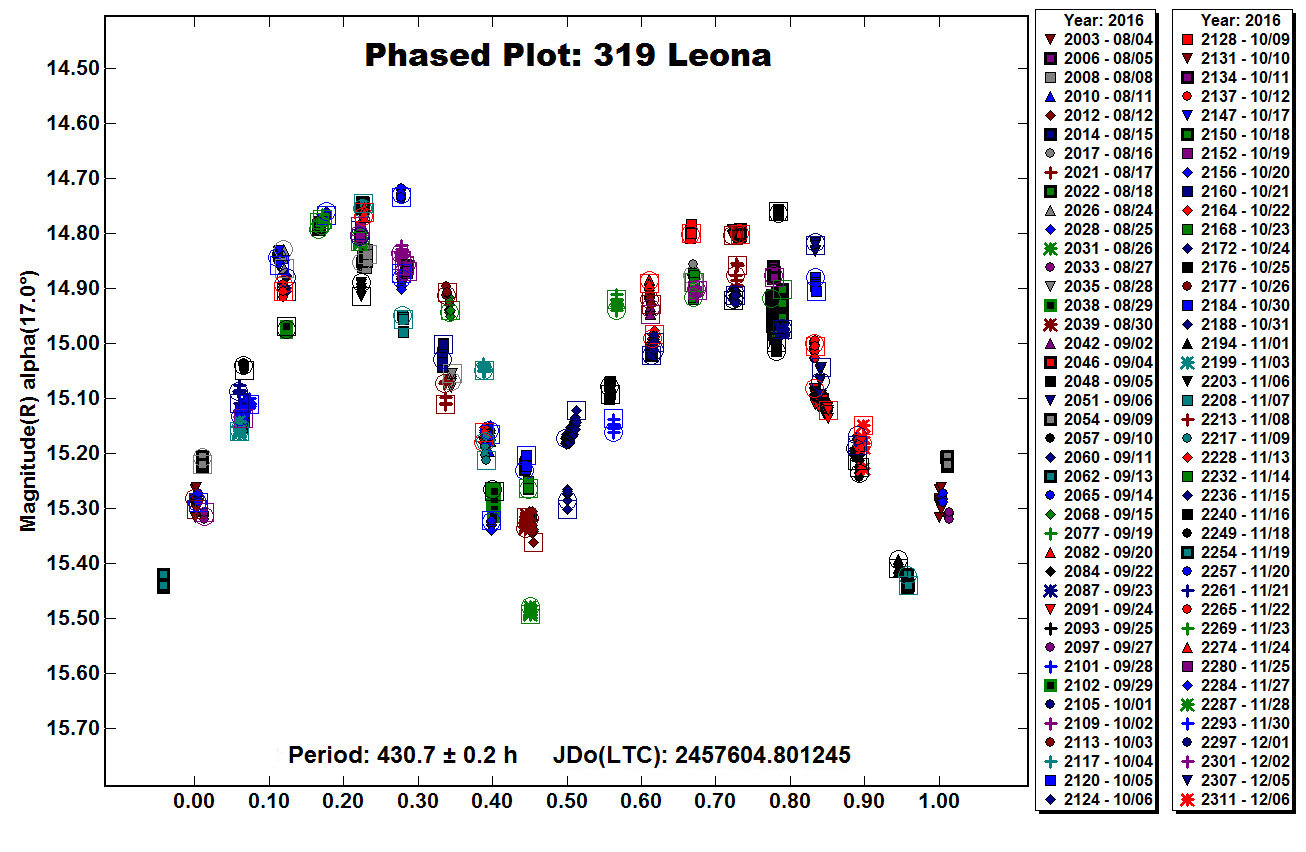
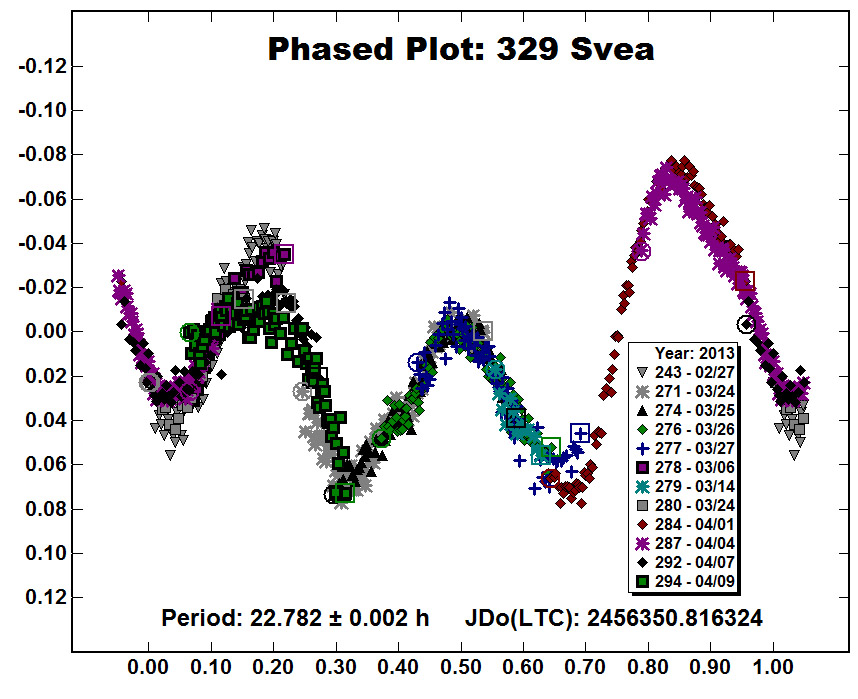
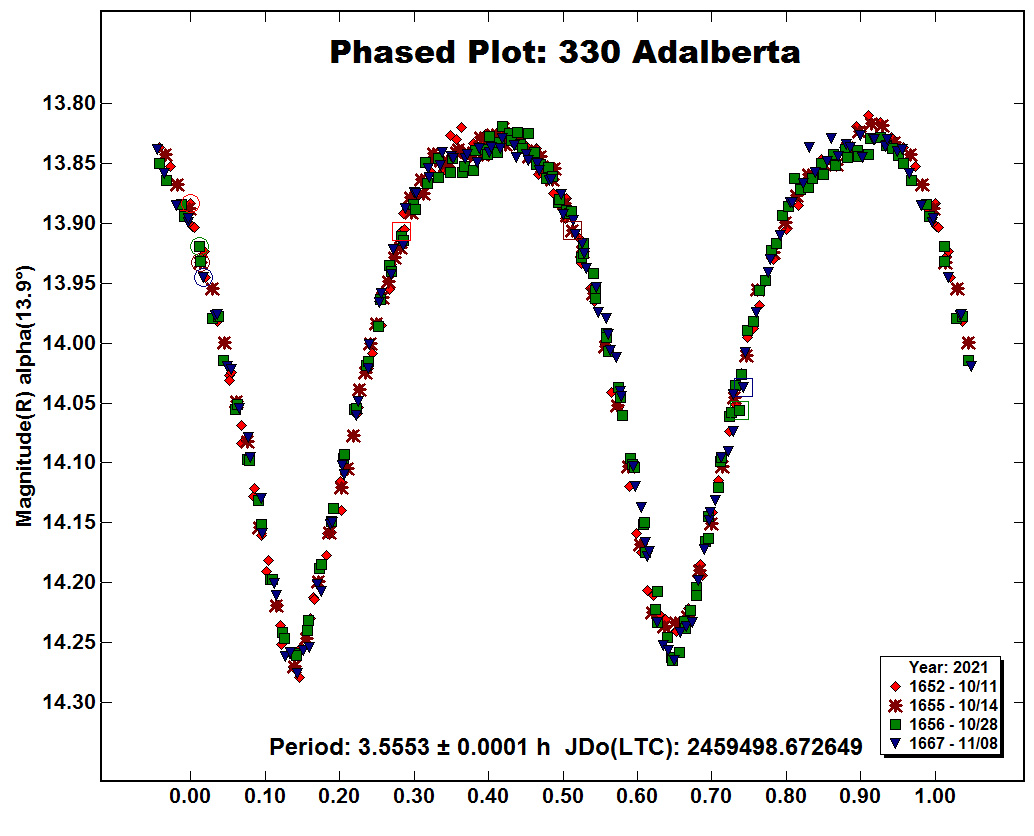
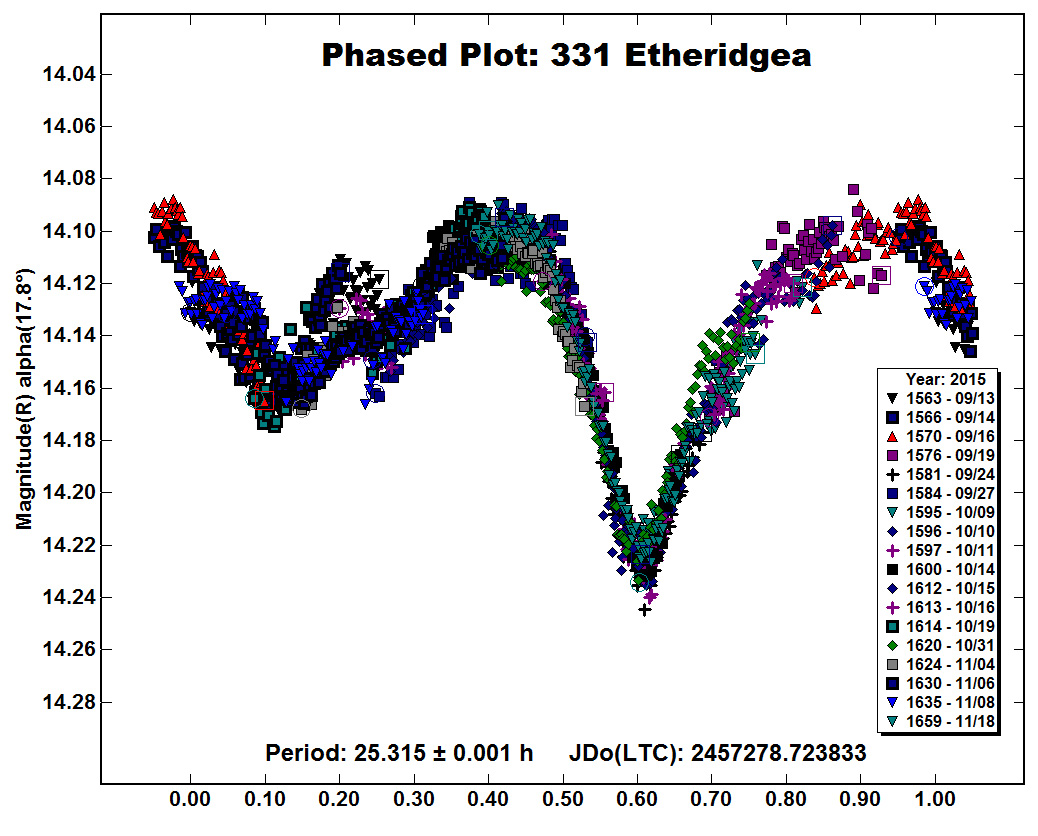
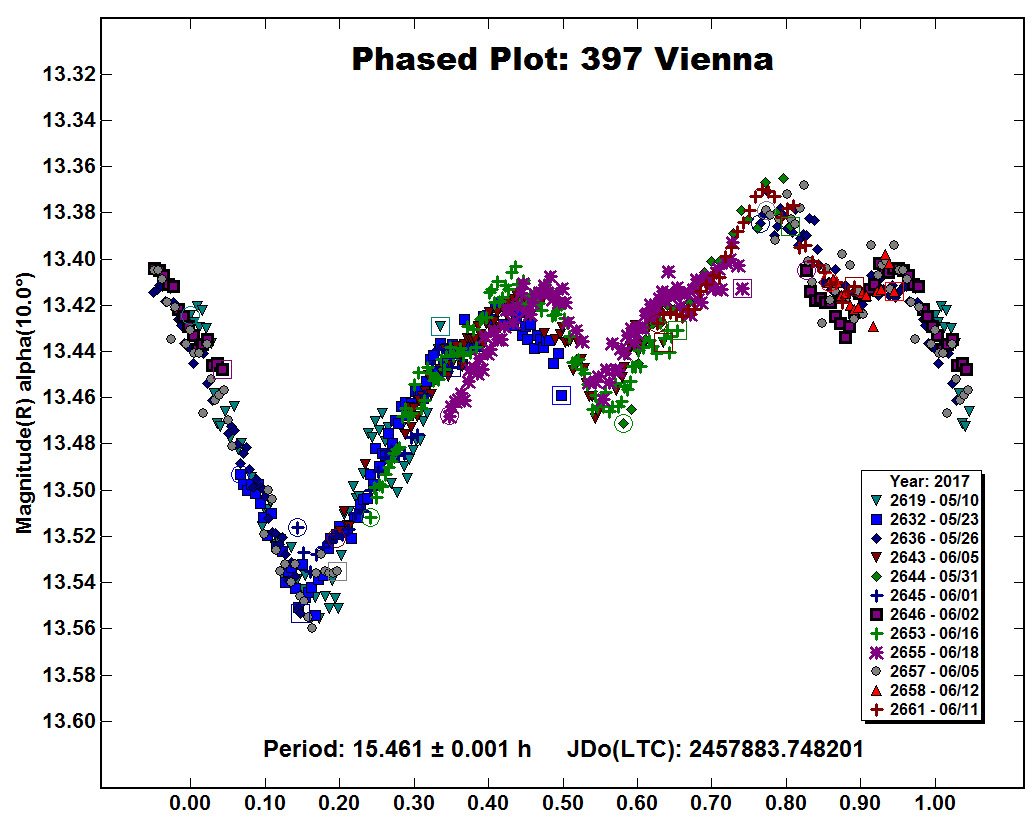
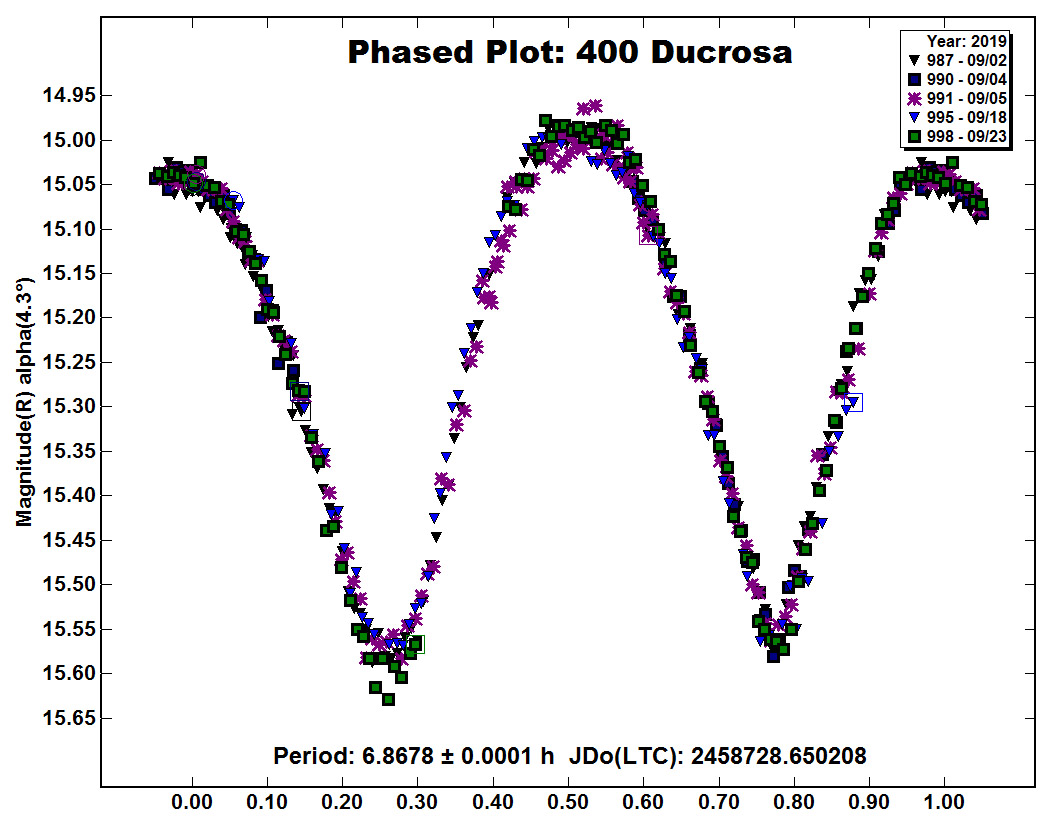
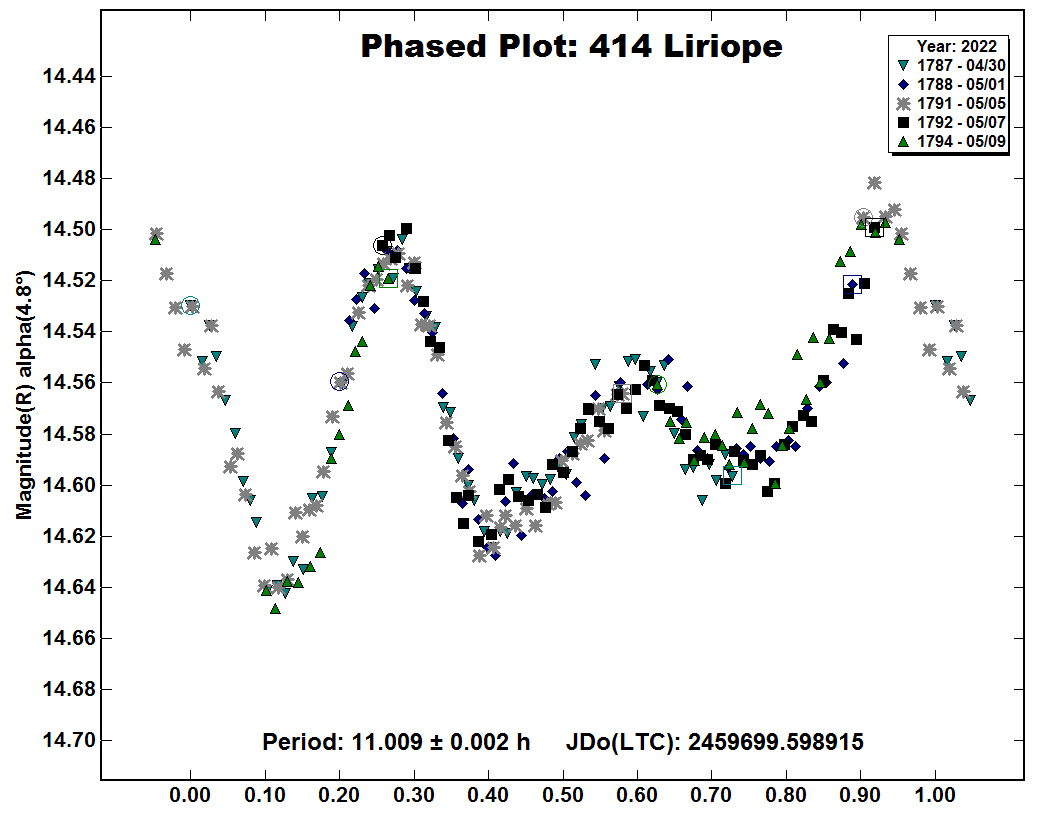
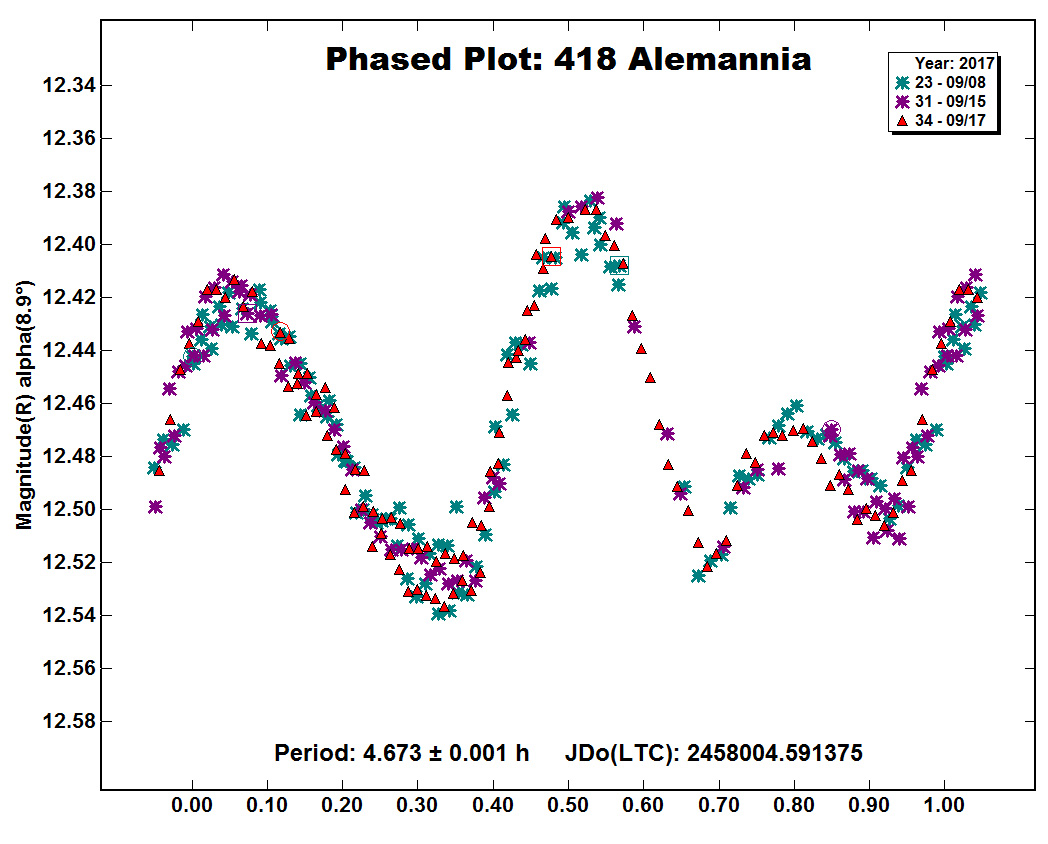
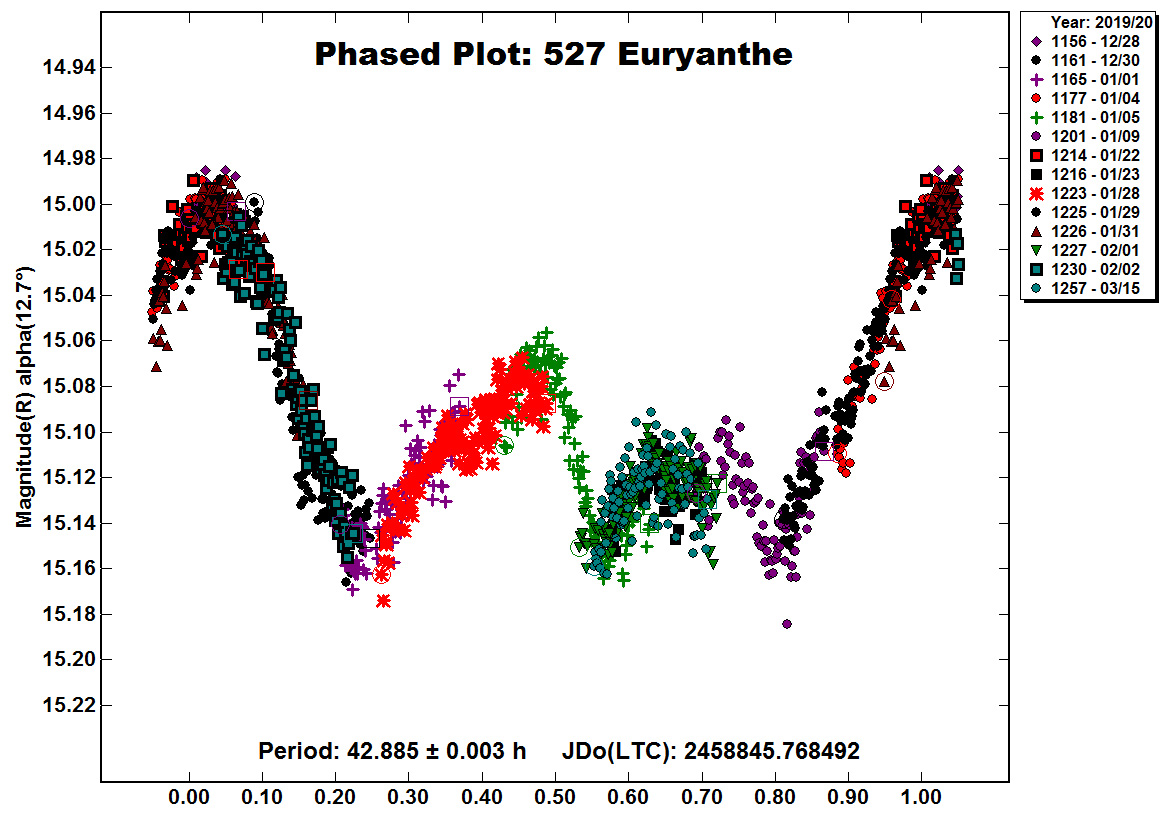
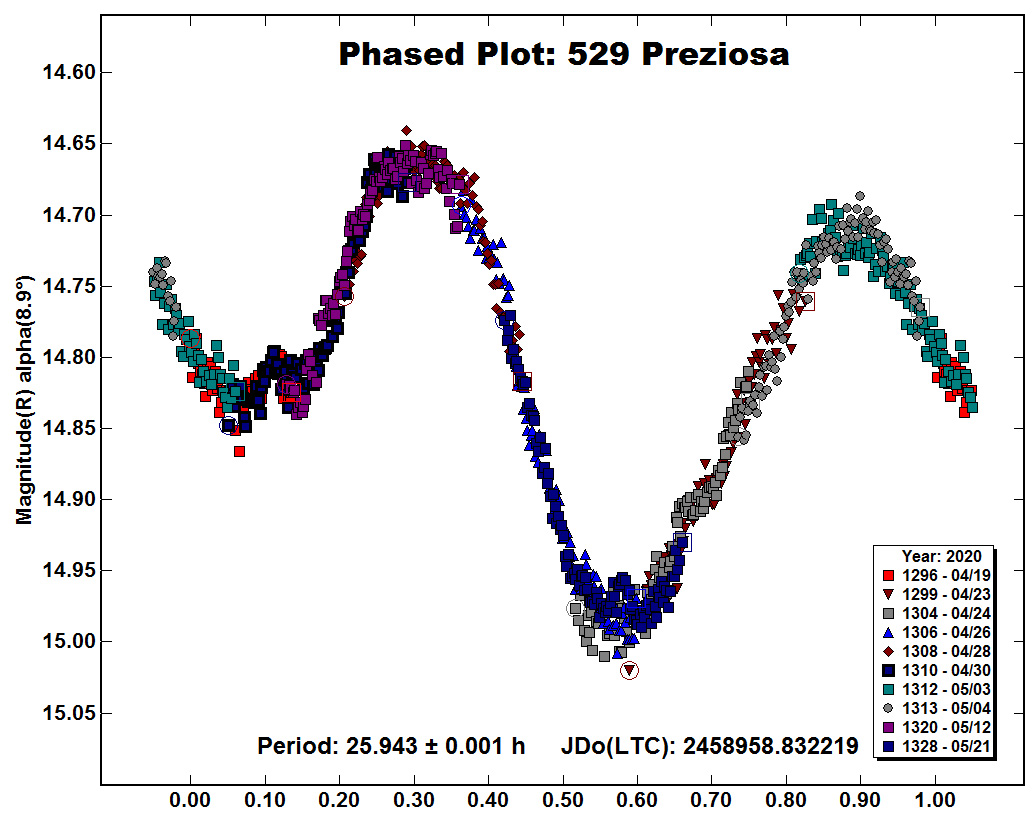
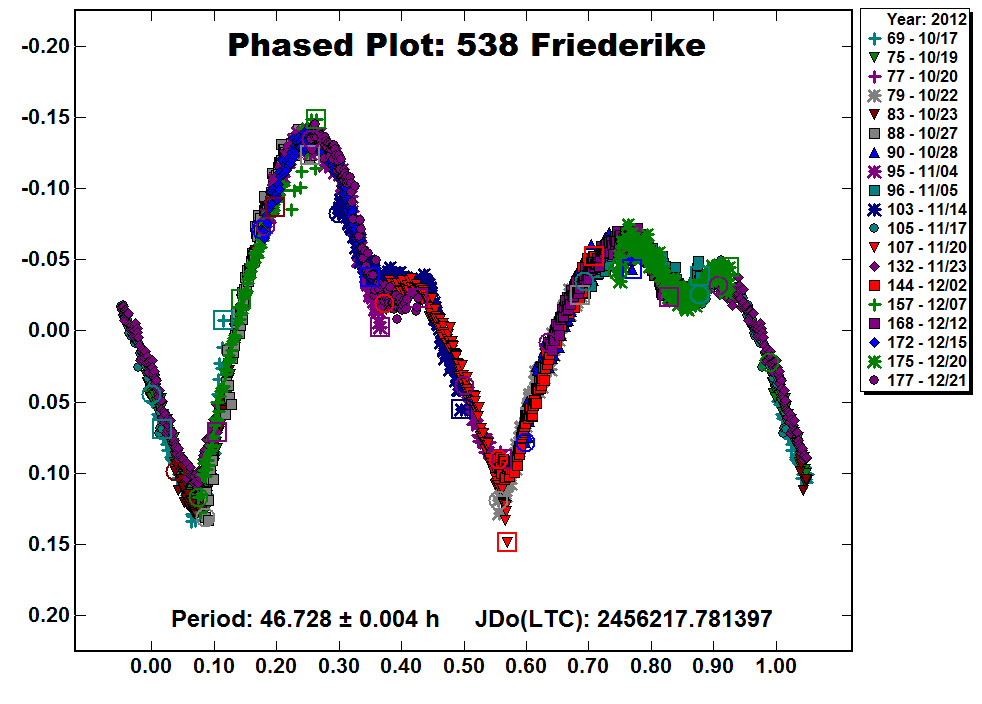
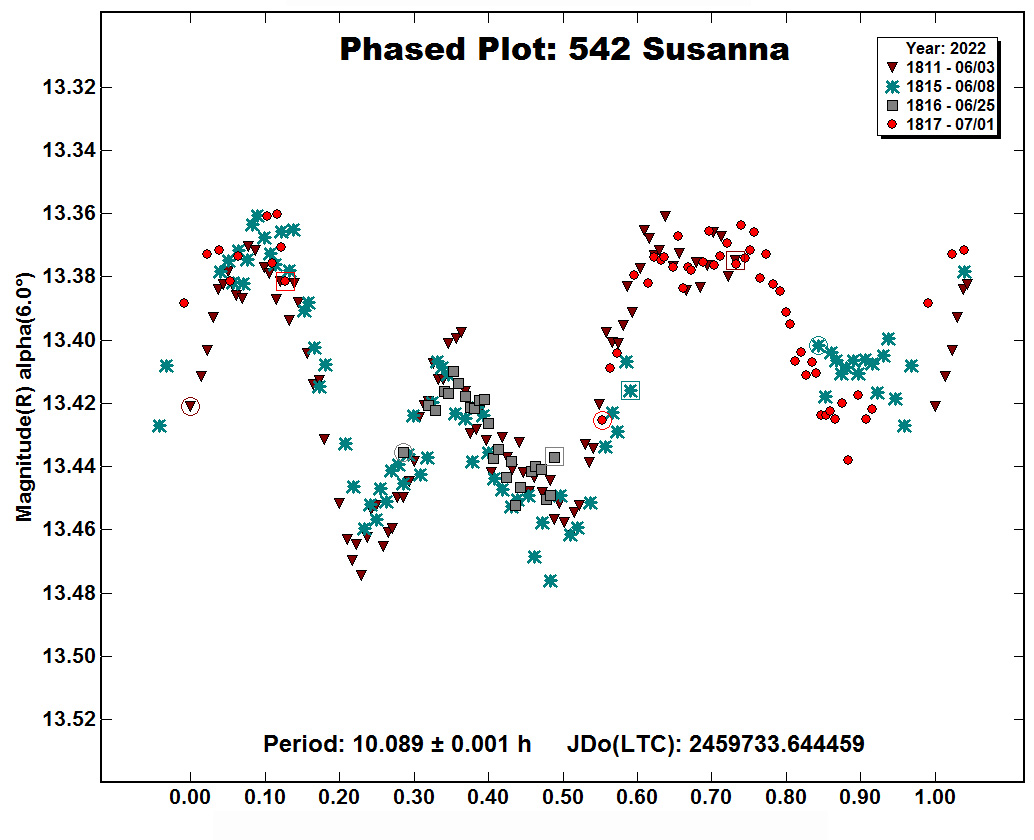
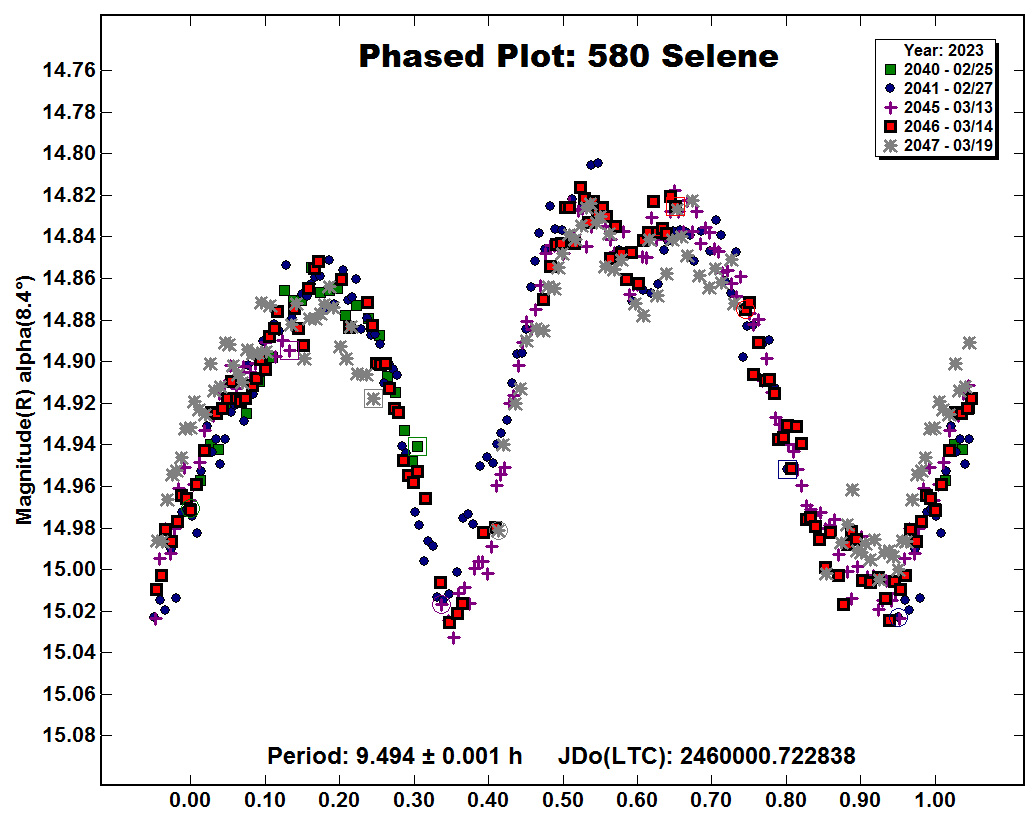
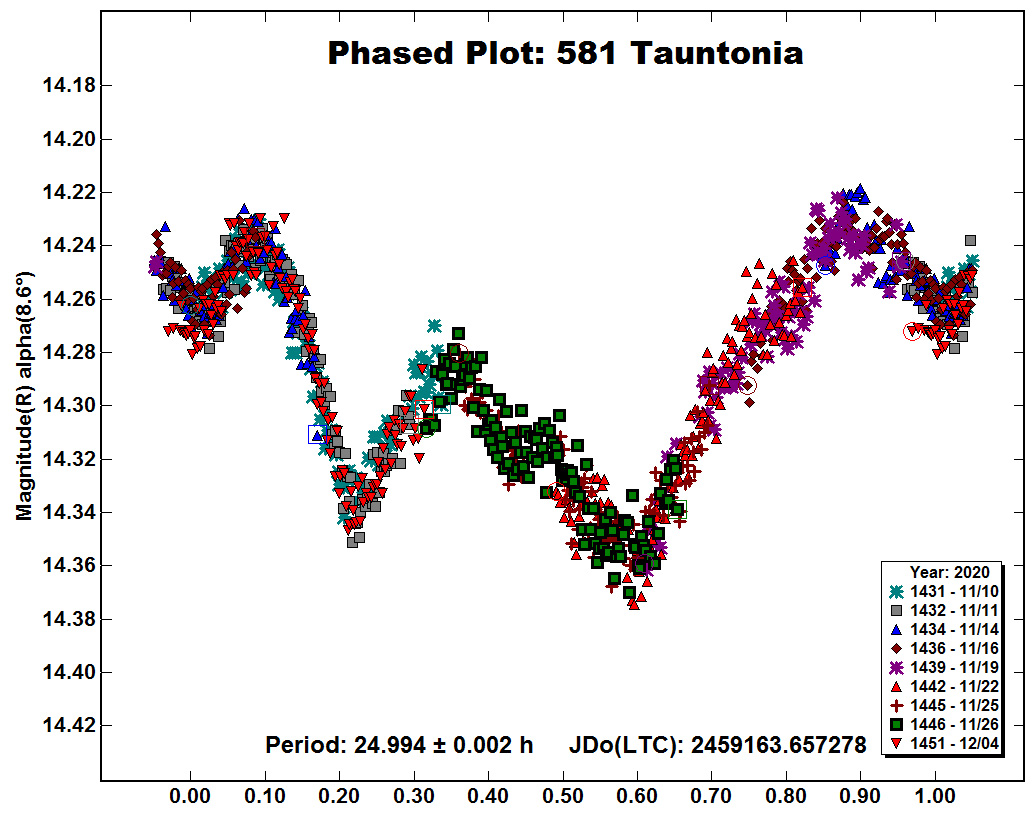
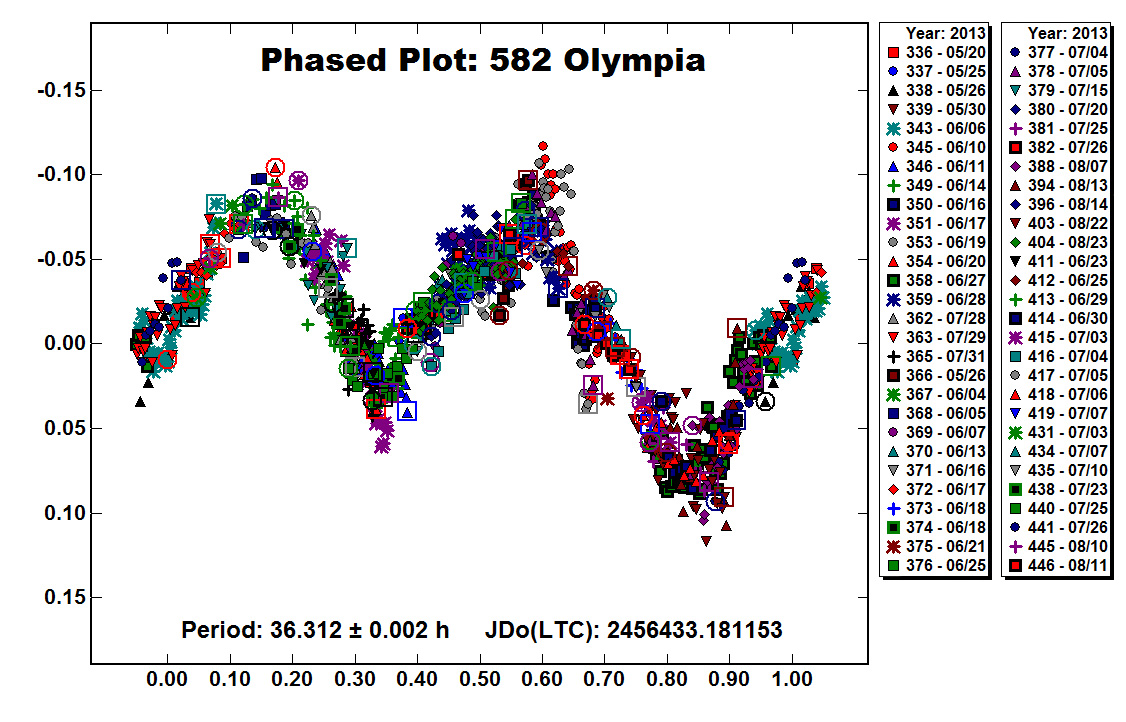
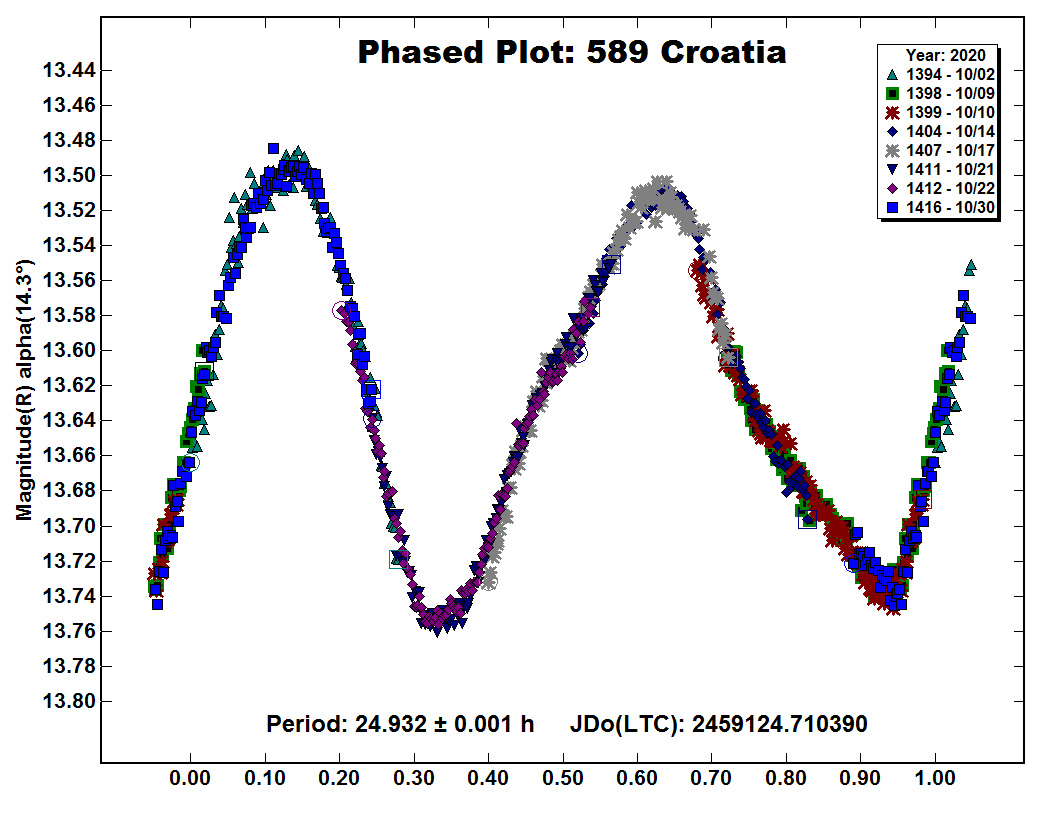
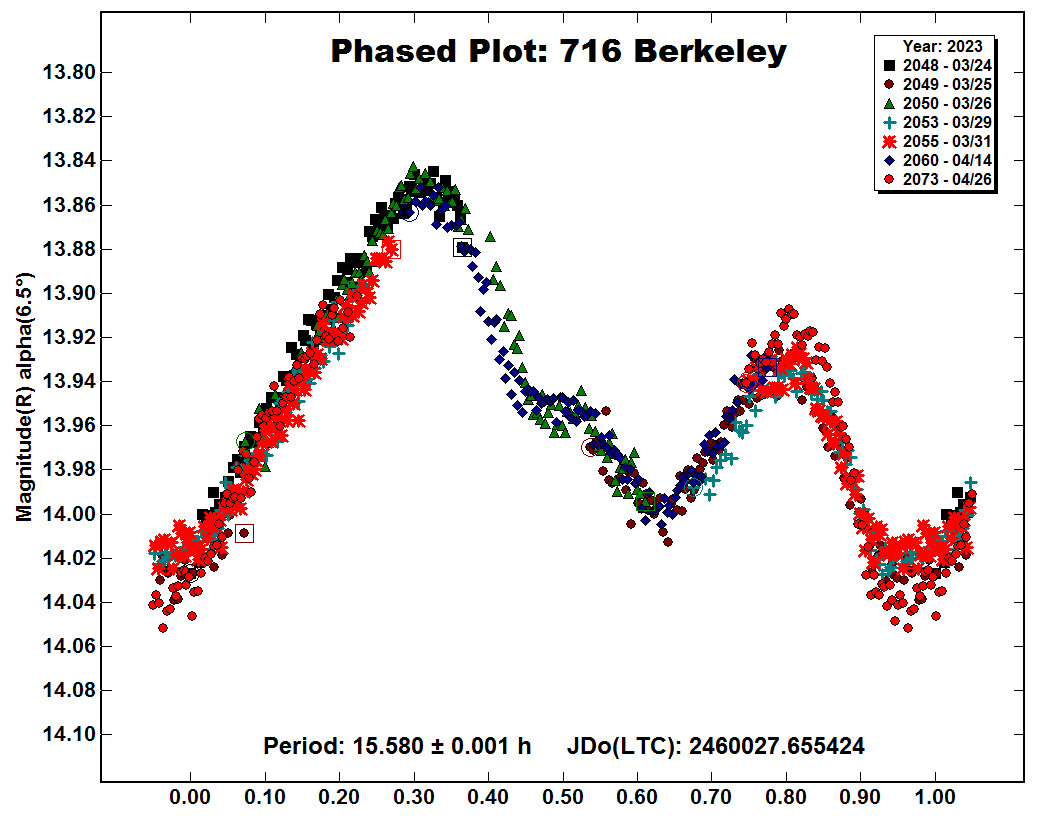
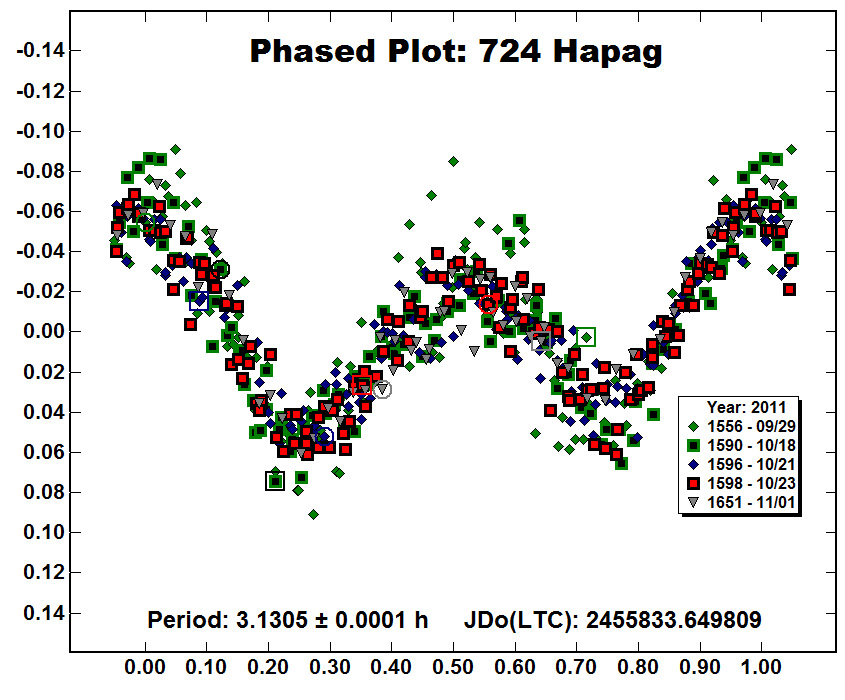
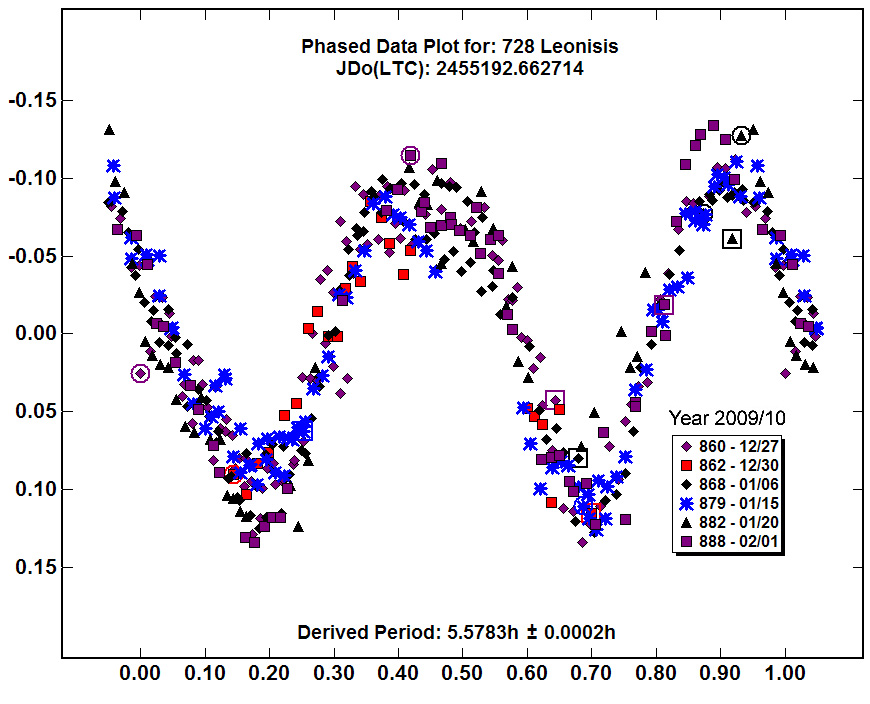
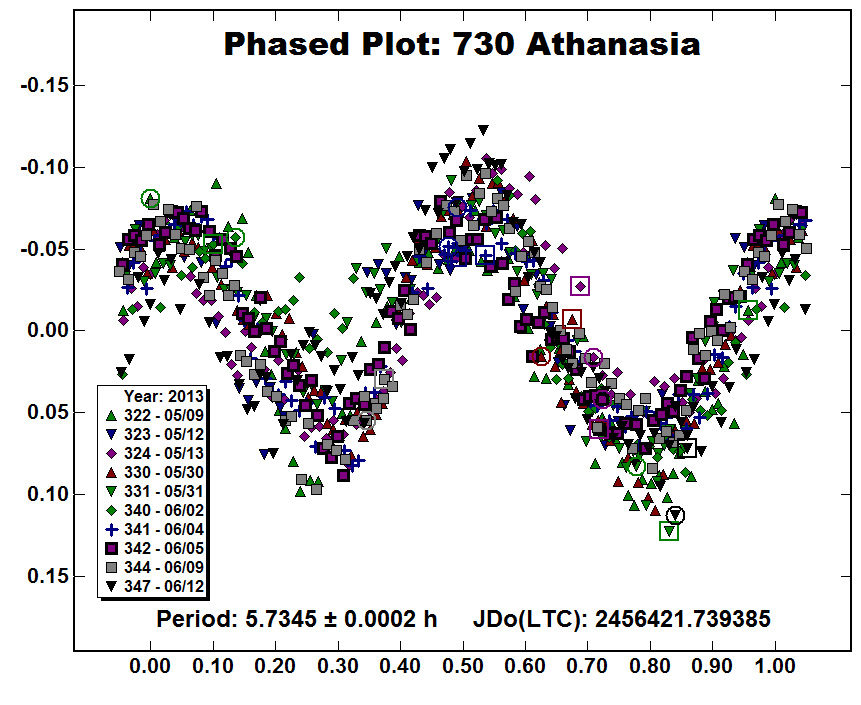
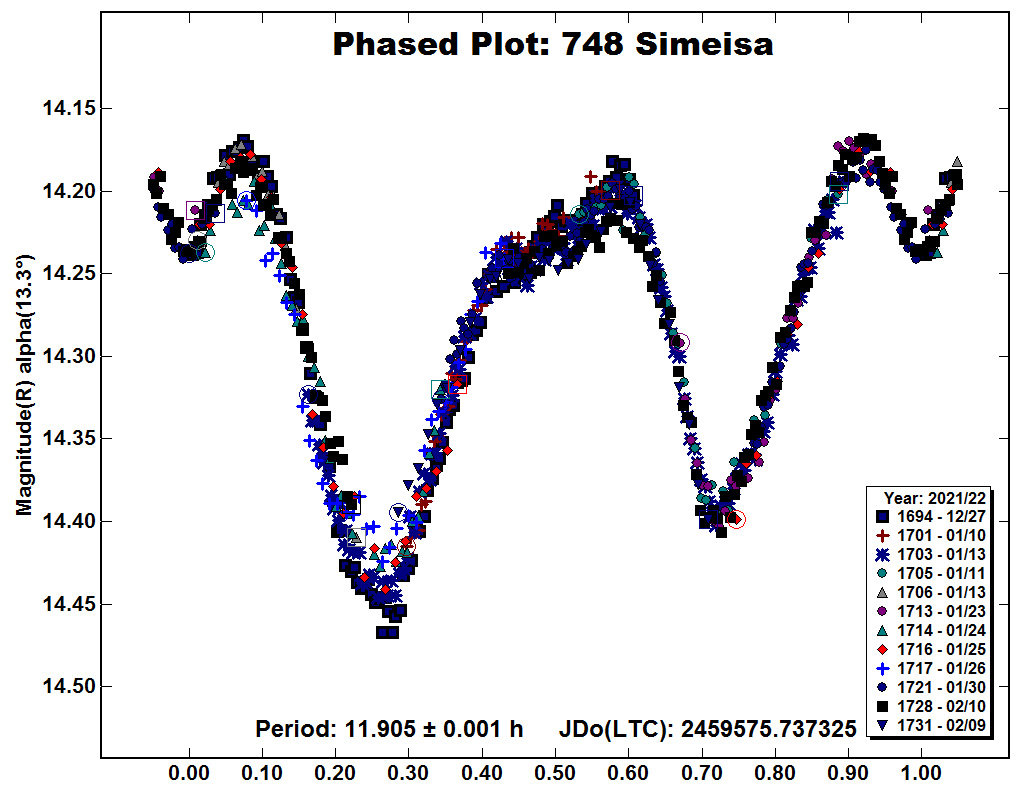
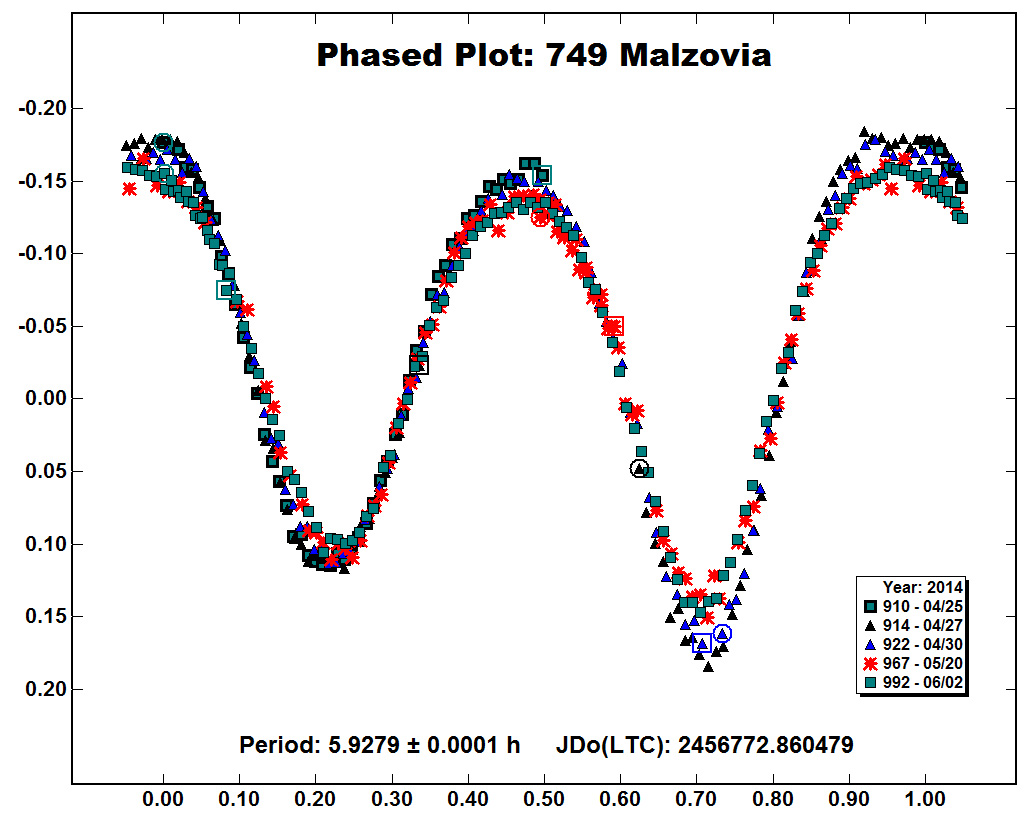
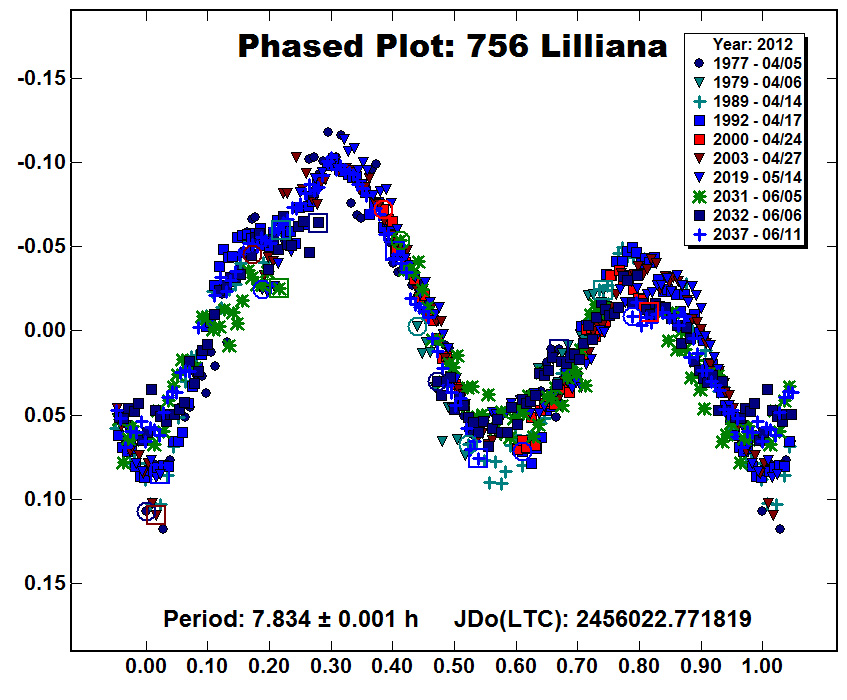
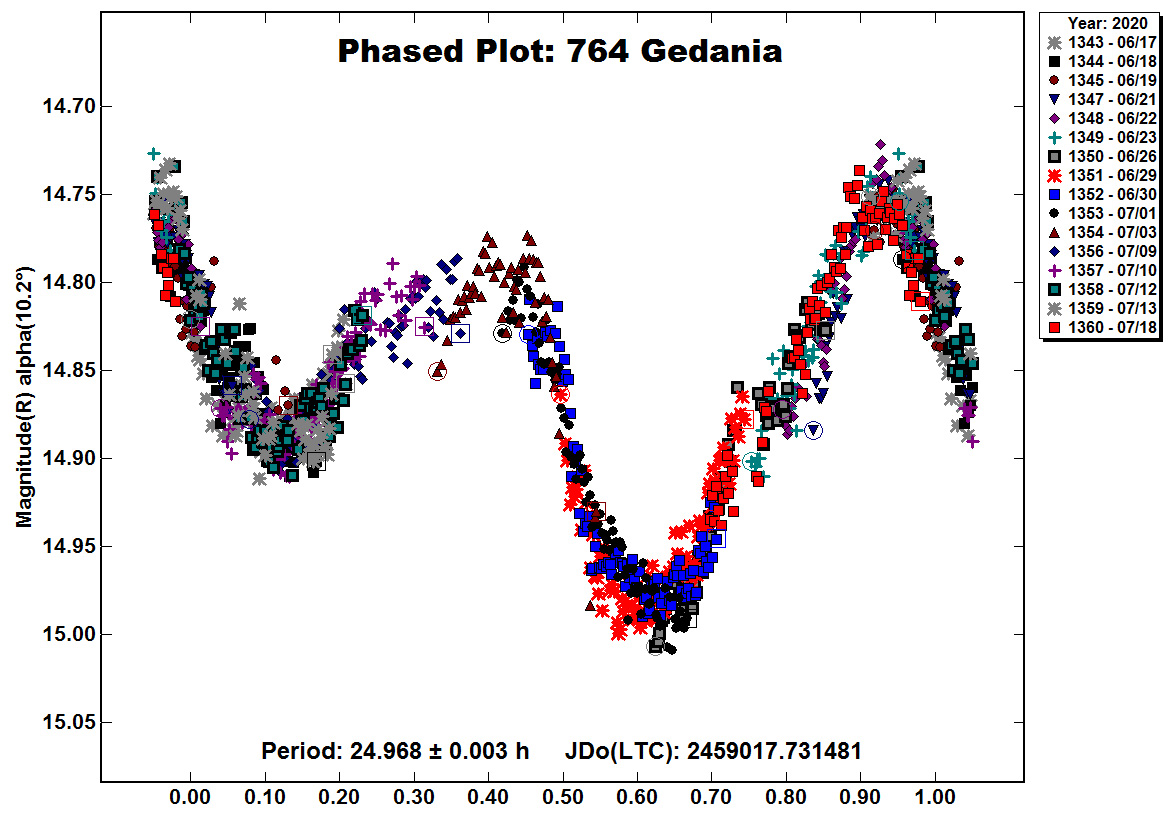
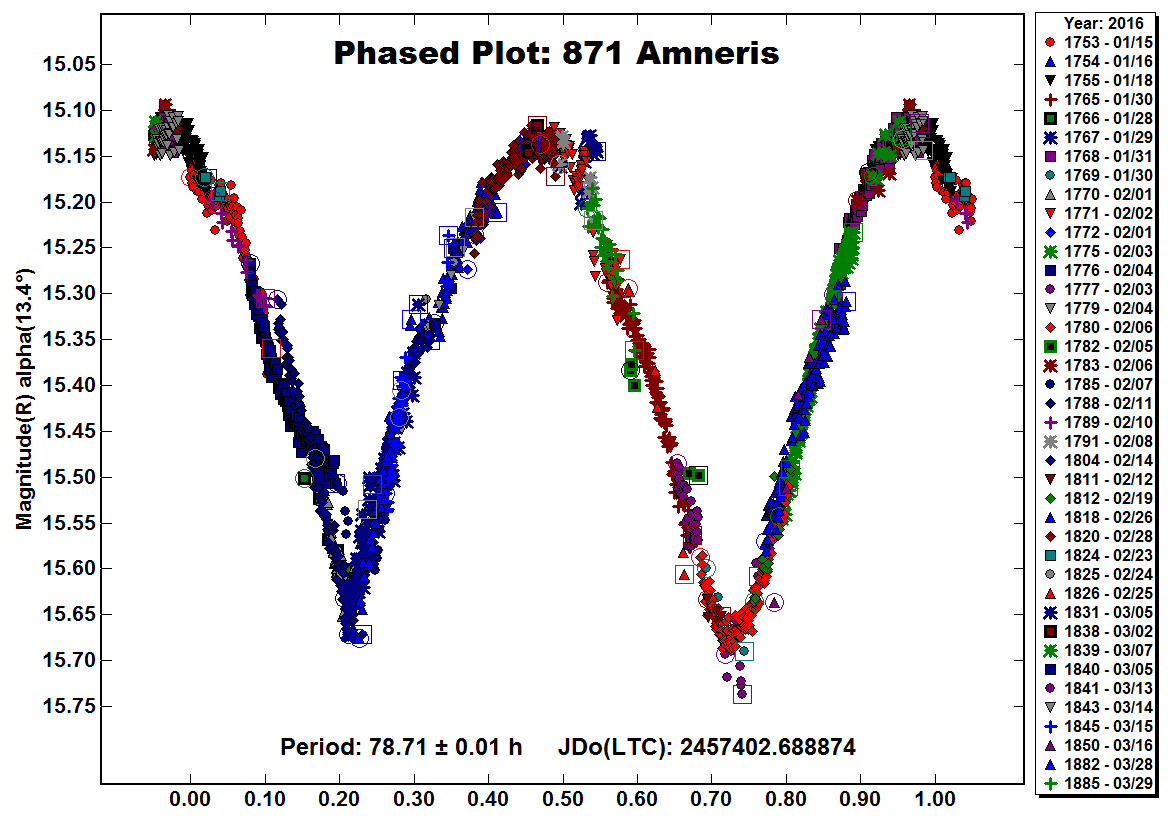
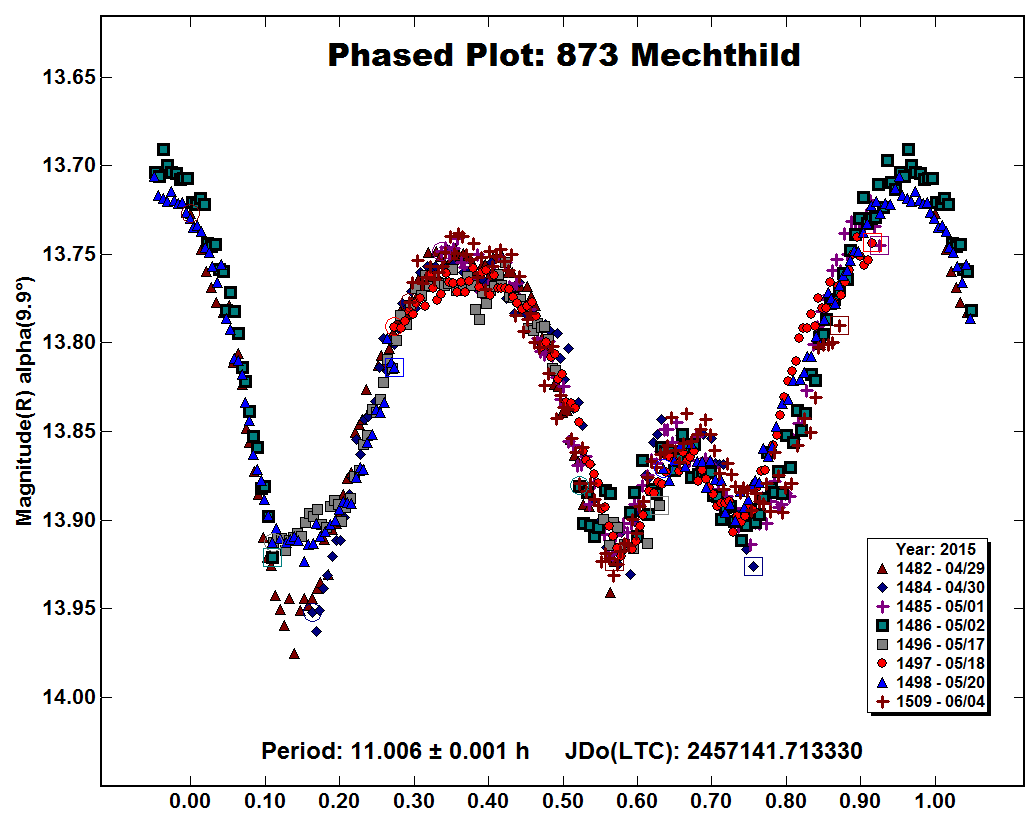
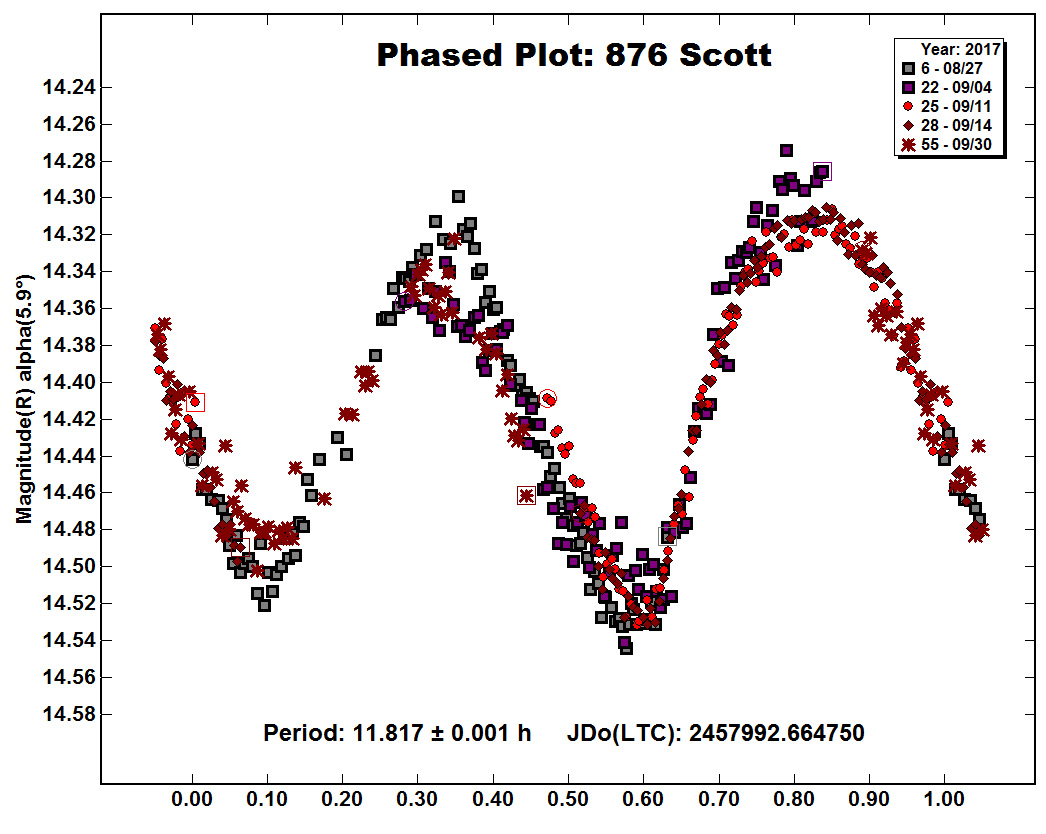
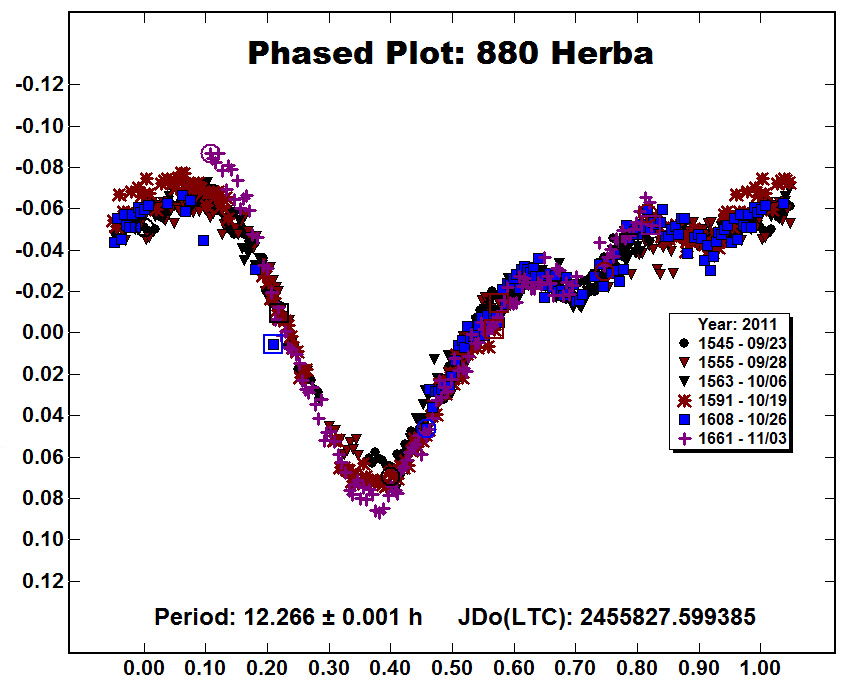
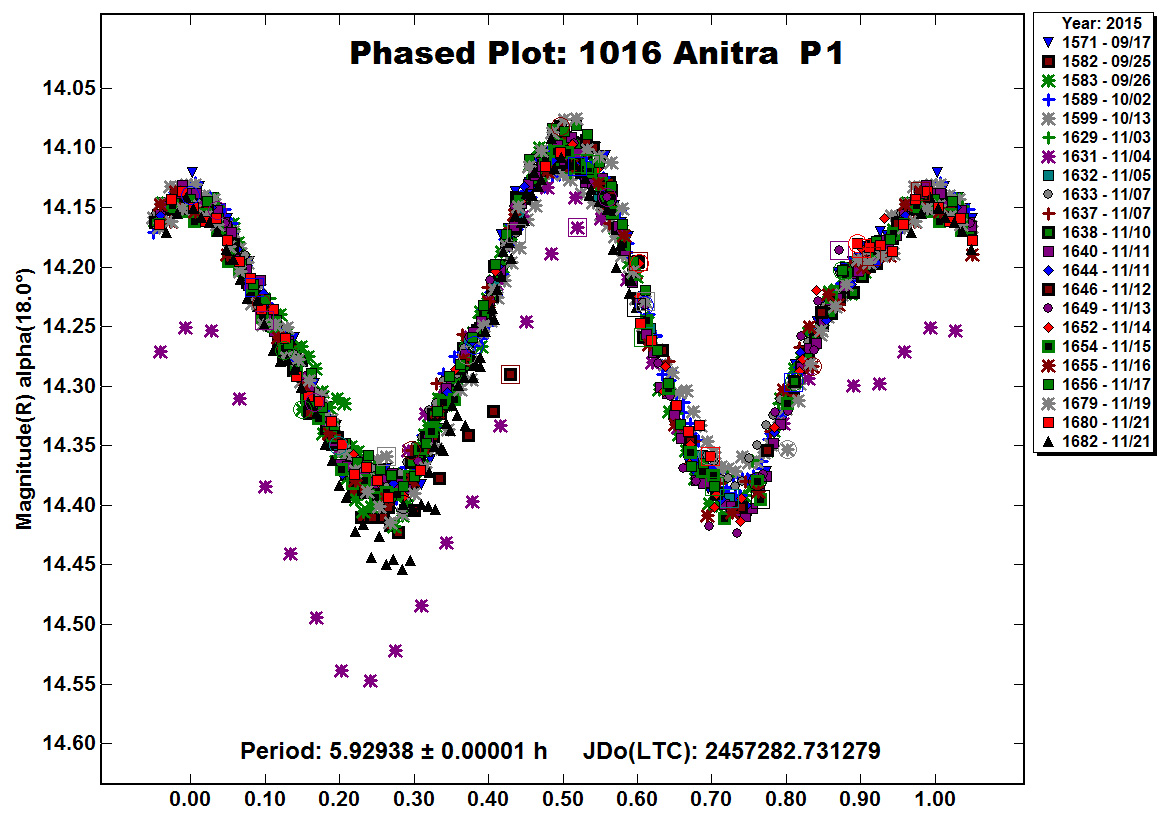
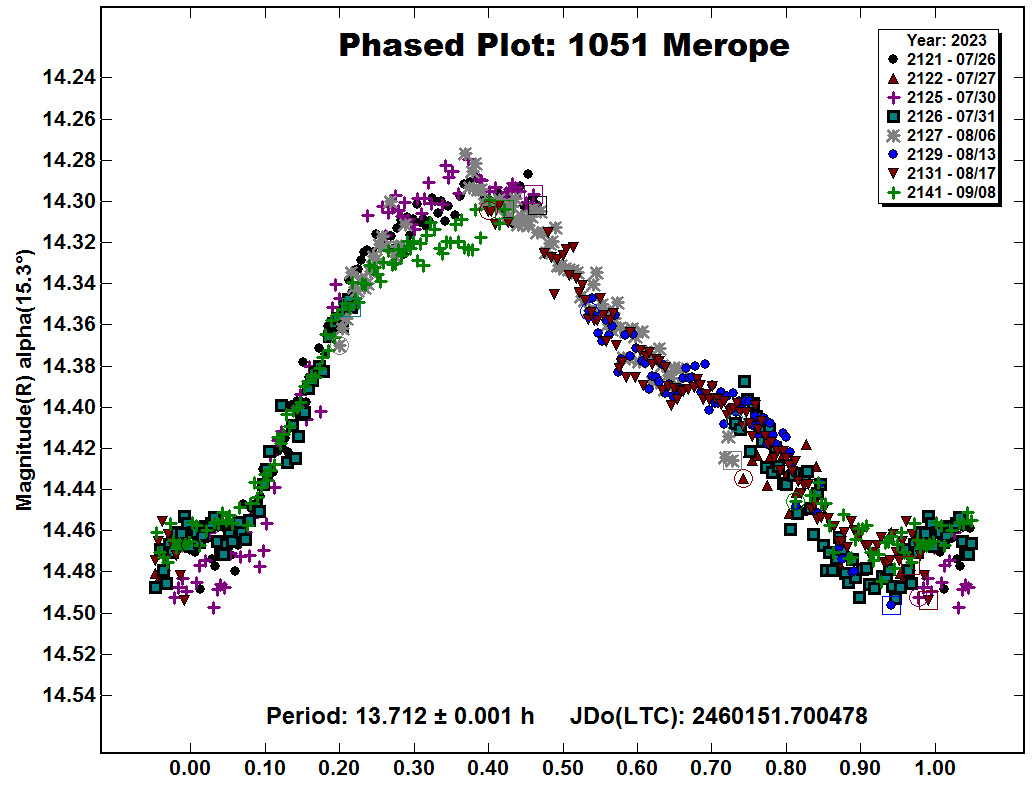
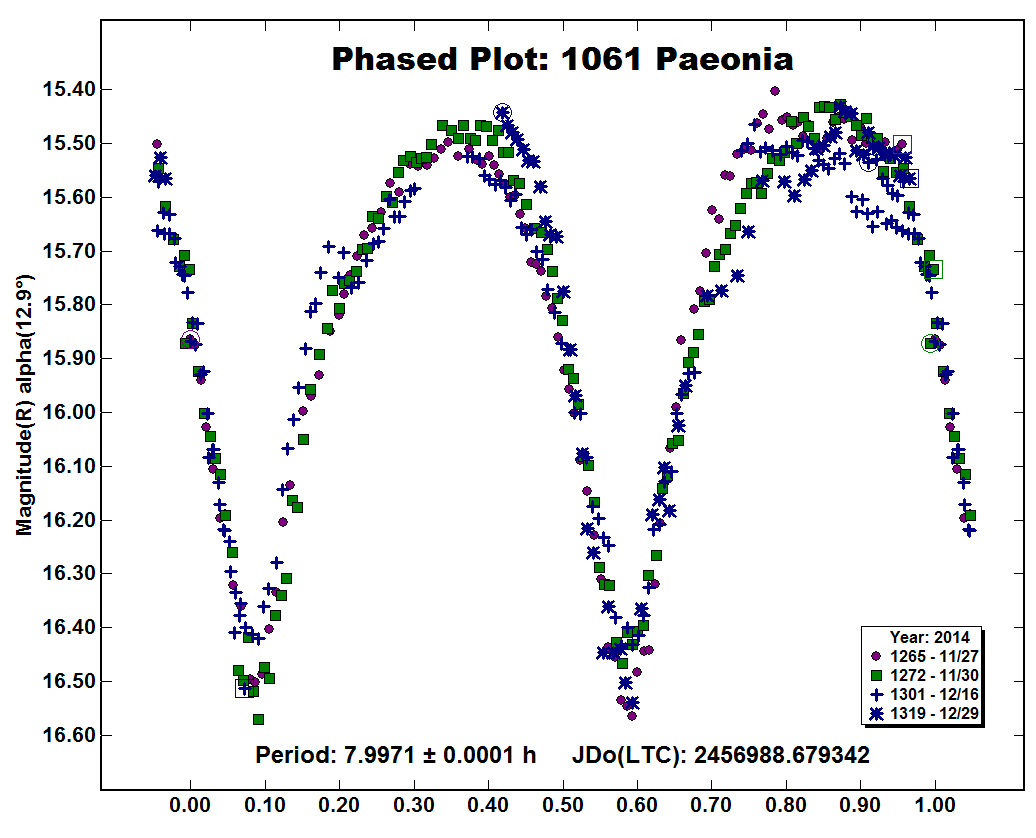
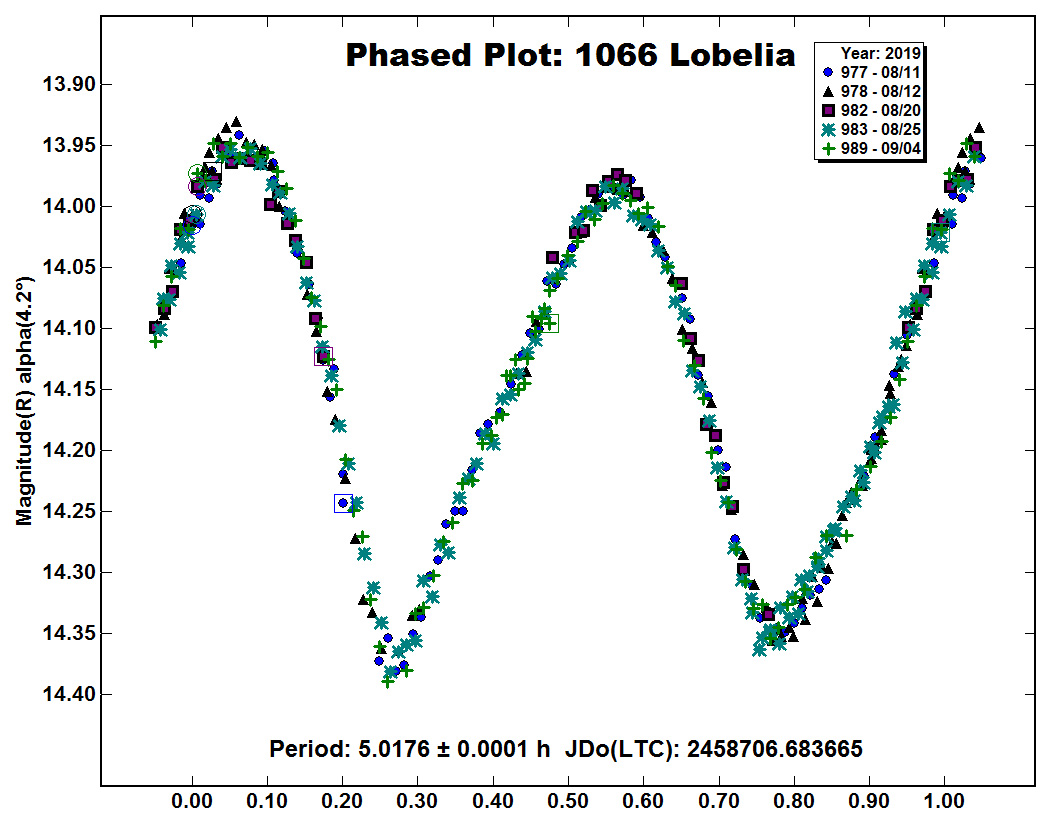
To view lightcurve data for a particular minor planet, please click on the asteroid's name below.
|